Showing posts with label Jesse Tree. Show all posts

Sunday, 5 December 2010

THE STOCK OF JESSE


The first reading at Mass today, the second Sunday of Advent, is Isaiah 11:1-10. Isaiah tells us that “A shoot springs from the stock of Jesse, a scion thrusts from his roots:” In the Genealogy of Jesus Christ as related in Matthew 1:1-17 and Luke 3:23-28, we see that Jesus descended from Jesse’s son, King David, and therefore, from Jesse.

Since medieval times Jesse has been placed at the base of Christ’s Family Tree. From the eleventh century the Tree of Jesse has been portrayed in religious iconography. In the representation of the Tree, it is usual for Jesse to be portrayed recumbent with a tree rising from his body and the ancestors of Christ portrayed in its branches, with Christ at the summit.

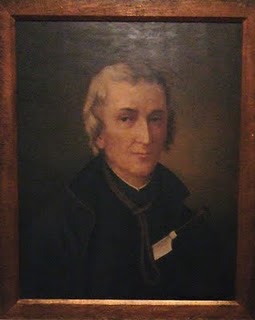
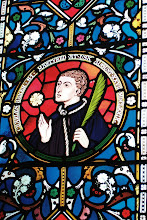
St David Lewis was born in Abergavenny in 1616. Although his mother, Margaret Pritchard, was a devout Catholic, David’s Protestant father, Morgan Lewis, brought David up in the Protestant faith. As a Protestant, David would have been baptised and attended services at St Mary’s Priory Church in the town. This beautiful and ancient church still serves Abergavenny today. Led by its popular and dedicated vicar, St Mary’s is a vibrant parish. Its recently restored Tithe Barn is a delightful and informative place to visit but the Priory Church itself is chock full of interesting features and historic treasures. Perhaps its most famous is its Jesse!

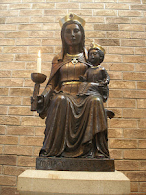
The Abergavenny Jesse is a 15th century figure carved from a single piece of oak. This recumbent Jesse was the base of the Jesse Tree and the Virgin & Child were at the top. The tree was probably around 30 feet high and it is thought to have been a reredos. Originally, the Abergavenny Jesse Tree was vividly coloured and it is still possible to see traces of colour in the details. This magnificent work is one of the finest medieval sculptures in the world. It is our good fortune that, despite the wanton vandalism of Henry VIII in the 16th century and Oliver Cromwell in the 17th century, this beautiful piece of artwork survives.

It gladdens the heart to think that St David Lewis might have looked upon the same Jesse that we can contemplate today. If you live within visiting distance, make it part of your Advent preparations for the coming of Christ. Marvel at the work of this unknown artist then treat your soul to a few quite moments meditating on the words of Isaiah; “A shoot springs from the stock of Jesse, a scion thrusts from his roots:”

Monday, 21 December 2009

JESSE


It is hard to believe that the Fourth Sunday of Advent has come and gone already! Yesterday at Mass we sang that old favourite, taken from the Great O Antiphons, “O Come, O Come, Emmanuel”. In the fourth verse we sang:
“O come thou Rod of Jesse, free
thine own from Satan’s tyranny;
from depths of hell thy people save,
and give them vict’ry o’er the grave.”

This particular verse turned my thoughts to St David Lewis, the last Welsh Martyr. I know! You are wondering how my mind jumped from Jesse, the father of King David, to St David Lewis, a leap of several thousand years! Well let me explain.

St David Lewis was born in the pretty market town of Abergavenny in 1616. His mother was a devout Catholic but his father, Morgan Lewis, was a Protestant and he had David brought up as a Protestant. It is almost certain that David would have been baptised in the Protestant parish church, St Mary’s Priory Church. Also, he would have attended services there. This ancient and beautiful church still serves Abergavenny today and it is one of the loveliest churches in Wales. It possesses many, many historic treasures and if ever the opportunity to visit the church should arise, I strongly urge you to take it. You will be delighted with what you see there.

Among the many treasures of St Mary’s Priory Church, and my personal favourite, is its famous "Jesse". So who is this Jesse? “A shoot springs from the stock of Jesse, a scion thrusts from his roots: on him the spirit of the Lord rests, a spirit of wisdom and insight, a spirit of counsel and power, a spirit of knowledge and of the fear of the Lord.” (Isaiah 11:1-3) “That day, the root of Jesse shall stand as a signal to the peoples. It will be sought out by the nations and its home will be glorious.” (Isaiah 11:10) These lines from the Old Testament foretell the coming of Jesus. Since medieval times Jesse has been placed at the base of Christ’s Family Tree. In the Genealogy of Jesus Christ as related in Matthew 1:1-17 and Luke 3:23-28, we see that Jesus descended from King David and therefore, from Jesse.

From the eleventh century the Tree of Jesse has been portrayed in religious iconography. In the representation of the Tree, it is usual for Jesse to be portrayed recumbent with a tree rising from his body and the ancestors of Christ portrayed in its branches, with Christ at the summit. The Abergavenny Jesse is a 15th century figure carved from a single piece of oak. This recumbent Jesse was the base of the Jesse Tree and the Virgin & Child were at the top. The tree was probably around 30 feet high and it is thought to have been a reredos. Originally, the Abergavenny Jesse Tree was vividly coloured and it is still possible to see traces of colour in the details. This magnificent work is one of the finest medieval sculptures in the world. It is amazing, and our good fortune, that this beautiful piece of artwork survived Henry VIII’s vandals and later, Oliver Cromwell’s thugs.

Isn’t it wonderful to think that St David Lewis, as well as generations and generations before him, would have looked upon this same Jesse, carved by the hand of an unknown artist, that we are privileged to enjoy today. And this all brings me back to:
“O come thou Rod of Jesse, free
thine own from Satan’s tyranny;
from depths of hell thy people save,
and give them vict’ry o’er the grave.”

(This photograph is of the beautiful, 15th century Jesse in St Mary's Priory Church, Abergavenny.)

Related Posts with Thumbnails