Showing posts with label Usk. Show all posts

Saturday, 29 August 2020

341 YEARS AGO TODAY

ABERGAVENNY, BIRTHPLACE OF ST DAVID LEWIS
David Henry Lewis was born in Abergavenny in 1616. He attended King Henry VIII Grammar School in the town. At that time his father, Morgan Lewis, was Headmaster.  David then went to London to study law.  During a stay in Paris, David converted to Catholicism.  Returning to Abergavenny, David lived with his parents until their deaths.  After their deaths, he set out for Rome to study for the priesthood. Shortly after ordination, Fr Lewis joined the Jesuits.

KING HENRY VIII GRAMMAR SCHOOL
Sent on the "English Mission",   Fr David Lewis S J returned to his homeland. During that time of persecution it was usual for priests to work under an assumed name so David Lewis adopted the alias of Charles Baker.  For more than 30 years Fr Lewis laboured tirelessly for his flock. 

THE SITE OF THE CWM

Based at the Jesuit College of St Francis Xavier at The Cwm, David Lewis traversed the area, usually at night and on foot, ministering to the needs of the people.  His kindness and compassion knew no bounds and extended to all in need.  He was well loved and because of his care to all, he became known as "Tad y Tlodion", "Father of the Poor".

THE GUNTER MANSION, CROSS ST, ABERGAVENNY
It is recorded that Fr Lewis, as well as his fellow Jesuit, Fr Philip Evans, stayed with the Gunters of Cross Street, Abergavenny.  Relatives of David Lewis, the Gunters were staunch Catholics who had a secret chapel in their home.  The priests regularly said Mass there and conducted Catholic services.  David Lewis also stayed at the home of his aunt, Lady Frances Morgan, at Llantarnam.  The Morgans also had a chapel in their home where the priest celebrated Mass and ministered to the people of that area.

LLANTARNAM ABBEY, HOME OF THE MORGANS
The Popish Plot was a fabricated plot spread by the vile Titus Oates and his sordid ilk. When its poison  spread to Wales, Fr Lewis moved from the Morgan's home in an attempt to spare them any trouble that might befall him.  He rented a little cottage at Llantarnam, roughly opposite where the lovely old Church of St Michael and All Angels is situated.  

PLAQUE MARKING SITE OF ARREST OF ST DAVID LEWIS
Early on Sunday morning, 17 November 1678, Fr Lewis was preparing to celebrate Holy Mass. Suddenly, a group of armed dragoons burst into the cottage and arrested him.  Several days later he was incarcerated in Monmouth Gaol.  On a freezing cold day in January 1679, the Jesuit was moved to the prison at Usk. He had been found guilty of high treason for the 'crime' of being a Catholic priest and saying Mass!  Here he remained to await his execution.

THE FORMER USK GAOL 
On 29 August 1679, 341 years ago today, Fr David Lewis was taken from the Gaol on Bridge St and dragged on a hurdle along the river path to the place of his execution.  It was on a makeshift gallows at the hands of a makeshift hangman that Fr David Lewis  met his martyrdom.

THE RIVER PATH TODAY
On 25 October 1970, Pope Paul VI canonised Fr David Lewis S J and 39 other Reformation Martyrs.  They are known collectively as the "Forty Martyrs of England and Wales".  Today, the Catholic Church of Ss David Lewis and Francis Xavier stands opposite the site of his martyrdom and St David Lewis is remembered with a lovely shrine in his honour.  

ST DAVID LEWIS

"Blessed be God in His Angels and in His Saints".

Wednesday, 10 June 2020

SAINTS JULIUS AND AARON

We are on home ground with these two pre-reformation martyrs.  Ss Julius and Aaron were martyred at Caerleon, which is just 7 miles from Usk, where our own St David Lewis died for the faith in 1679.

Most of what is known about Ss Julius and Aaron we glean from the writings of Bede.  In his 'History of the English Church and Peoples', Bede writes "In the same persecution (as Alban) suffered Aaron and Julius, citizens of the City of Legions."  Not too much else is known about the two martyrs.  Some legends maintain that that were Roman soldiers who were converted by the priest, Amphibalus, after his escape from Verulamium.  Some hold the belief that Aaron was a native Briton, and Julius a Roman.  It is thought that, dying soon after Alban, they were probably victims of the Diocletian persecution.  
Catholic Church of Saints Julius, Aaron
and David, Caerleon
The Catholic Church in Caerleon is dedicated to Ss Julius and Aaron.  In Wales, their feast day is celebrated with St Alban on 20th June. 

Saturday, 24 August 2019

TOMORROW IS THE DAY!

Don't forget, tomorrow is the day!  The pilgrimage in honour of our patron, St David Lewis, will take place tomorrow, 25th August.
To learn more about St David Lewis, have a look at the official website of Friends of Saint David Lewis (link here).

Sunday, 17 November 2013

BETRAYAL AND ARREST AT LLANTARNAM, CWMBRAN


On this day 335 years ago a good and innocent man was betrayed by so called friends.  This act of treachery was perpetrated on the Welsh Jesuit, Fr David Lewis, as he prepared to celebrate holy Mass at Llantarnam, Cwmbran.  In those sad and turbulent times it was against the law to practise the Catholic Religion in the country.  It was deemed high treason to be a Catholic priest, to remain in the country and to celebrate Mass.  However, Fr Lewis, along with many other courageous priests, remained and tended to the needs of the harassed Catholics the length and breadth of the poor benighted country. 

The Church of St Michael and All Angels, Llantarnam, Cwmbran.  This ancient church is opposite the spot where St David Lewis was arrested on 17th  November 1678.  The Public Footpath which runs beside the church is believed to have been in use for hundreds of years.  If this is correct, then it is quite possible that St David Lewis tread this path on his visits to Llantarnam Abbey where he lived for a time with his relatives, the Morgans, and said Mass in their private chapel for the Catholics of the surrounding area.

 
John Arnold of Llanvihangel Court was a Justice of the Peace and a Member of Parliament.  Although he was a staunch adherent of the new State Religion and an avid priest hunter, Arnold had always shown friendship towards David Lewis and the Jesuit seems to have trusted the man and believed the friendship to be genuine.  Sadly, John Arnold was not to be trusted and on Sunday, 17th November 1678, the perfidious Arnold sent his goons to arrest the hapless priest.  The following is an account of the arrest, written by Fr Lewis himself:
 
“After my full thirty years poor missionary labours in South Wales, on Sunday morning, a little before day, being the 17th November 1678, I was taken by six armed men sent by Mr John Arnold and Mr Charles Price, until then my two very good friends and acquaintances. I was taken in a little house in the parish of St Michael-Llantarnam in the County of Monmouth. From thence by the soldiers, together with such church stuff of mine they there found, carried I was to the house of Mr Charles Price in Llanfoist”


This plaque at the Old Post Office (now a private house) was erected in 2007.  
The plaque marks the site where St David Lewis was
arrested on 17th November 1678.

 
On 27th August 1679, after a fixed trial and nine months of incarceration, Fr David Lewis was slaughtered at Usk.  His only crime was to be a Catholic priest who said Mass.  History records for us that the charge against the priest was “David Lewis pro Sacerd Roman”, that is “David Lewis for being a Roman Priest”.   We also have the words of Judge Atkins, the trial judge, who stated; “It is enough that you have exercised the functions of a priest in copes and vestments used in your Church, and that you shall have read Mass and taken Confessions.   HE THAT USES TO READ MASS COMMITS TREASON!”
 
In October 1970, Pope Paul VI canonised the Forty Martyrs of England and Wales.  The Welsh Jesuit, Fr David Lewis, was among them.  Today, on this 335th anniversary of the arrest of St David Lewis at Llantarnam, let us be inspired by his heroism, bravery and faithfulness and pray for our Christian brethren in various parts of the world who are still suffering persecution for the sake of their Christian faith.

Tuesday, 6 August 2013

ANNUAL PILGRIMAGE IN HONOUR OF ST DAVID LEWIS

St John Kemble and St David Lewis were kinsmen.   David Lewis was a Jesuit priest and John Kemble a secular priest.   Both priests served the Welsh Mission in a time when to be a Catholic was to risk much but to be a Catholic priest was to risk all!   During the Titus Oates Plot the cousins were arrested, tried and convicted of High Treason. To be a Catholic priest and to say Mass was considered High Treason! They were sentenced to the usual punishment for High Treason, to be hanged, drawn and quartered.   On 22nd August 1679 eighty year old Fr John Kemble was executed at Widemarsh Common, Hereford. Just five days later, on 27th August 1679 David Lewis was executed at Usk. He is the LAST WELSH MARTYR. 
 
On 25th October 1970, Pope Paul VI canonised John Kemble and David Lewis along with thirty-eight other Martyrs. Collectively they are known as The Forty Martyrs of England and Wales.


This year, the Annual pilgrimage in honour of ST DAVID LEWIS will take place on SUNDAY 25th AUGUST 2013.
3:00 p m: Benediction of the Blessed Sacrament at Catholic Church of St Francis Xavier and St David Lewis, Porth-y-Carne Street, Usk.  Following Benediction, pilgrims will process from the Church to the grave of St David Lewis in the churchyard of St Mary's Priory Church, Usk.

Saturday, 30 March 2013

“PRO SACERD ROMAN”


Site of the arrest of St David Lewis
Fr David Lewis S J had been arrested at Llantarnam on 17th November 1678 and imprisoned in Monmouth gaol.  On 13th January 1679 he was transferred to the gaol at Usk.  On 28th March he was again back in Monmouth to be tried at the spring assizes which was presided over by Sir Robert Atkins. 

The Monnow Bridge
 
Fr Lewis was indicted under Statute 27 Elizabeth which deemed it a capital crime to be ordained abroad and return to England for more than forty days.  The charge against him was “David Lewis pro Sacerd Roman”, that is “David Lewis for being a Roman Priest”!  The charge against the priest was read by the Clerk of the Assizes; “Here thou standest indicted of High Treason by the name of David Lewis, for thou being a natural subject of the King of England, hast passed beyond the seas and taken Orders from the Church and See of Rome”.

Fr Lewis pointed out that it was necessary for the prosecution to prove him guilty of the charge of being ordained overseas and taken Orders from the See of Rome.  Judge Atkins responded to this with a curt rebuff but his words made it clear for all time exactly why the priest was condemned.  “What do you expect?  Shall we search the records at Rome, or bring persons to prove that they saw you ordained?  It is enough that you have exercised the functions of a priest in copes and vestments used in your Church, and that you shall have read Mass and taken Confessions.  HE THAT USES TO READ MASS COMMITS TREASON!”
 
The priest hunter, John Arnold, was allowed to sit next to the Judge and permitted to challenge the jurors one by one until he had achieved his goal – a jury that was anything but impartial and certain to convict the priest! This manipulation of the jury did not go unnoticed and the High Sheriff of Monmouthshire protested that Arnold was guilty of “packing the jury”.  His protestations came to naught when Judge Atkins reprimanded him for being “saucy”.  John Arnold was now secure in the knowledge that his handpicked jury would seal the fate of the hapless Fr David Lewis.
 
At about 10 o’clock the following morning, 29th March 1679, the trial of Fr David Lewis began.  Several witnesses were called who swore that they had seen him celebrate Mass.  Chief among them were William and Dorothy James.  However, two of the Crown’s other witnesses heroically refused to give evidence against Fr Lewis.  The defendant challenged the character of some of the witnesses brought against him and exposed the sheer malice of Dorothy James.   With John Arnold’s influence, there was no chance of the accused getting anything even resembling a fair trial and the verdict was a foregone conclusion.  It was sufficient that Dorothy and William James had sworn they had seen the Jesuit say Mass and on this evidence the jury was directed that “If you believe what the witnesses swore you must find the prisoner guilty”.  As expected, the jury found him guilty of treason!


Usk Gaol where St David Lewis awaited his execution

Judge Atkins then put on his cap and pronounced the sentence:  “David Lewis, thou shalt be led from this place to a place whence thou camest, and shalt be put upon a hurdle and drawn with thy heels forward to the place of execution where thou shalt be hanged by the neck and be cut down alive; thy body to be ripped open and thy bowels plucked out; thou shalt be dismembered and thy members burnt before thy face.  So the Lord have mercy on thy soul.”
 
Upon hearing the sentence Fr Lewis made a low bow toward the judge and was led away.  He was returned to Usk Gaol where he was to await his gruesome fate.  On 27th August 1679 Fr David Lewis, the last Welsh martyr, was executed for the crime of being a Catholic Priest and saying Mass.  


St David Lewis was martyred near this site


Friday, 25 January 2013

NOT THE LAST!

I have read several books, written by local authors, stating that St David Lewis was the last Catholic martyr in Britain.  This has also been said in an otherwise excellent video available on youtube.  I don't wish to engender any controversy but I feel I should point out that this is incorrect. 
 
Fr David Lewis S J (alias Charles Baker) was executed at Usk on 27th August 1679.  He, along with 39 others, was canonised in 1970 by Pope Paul VI as one of the Forty Martyrs of England and Wales.  ST DAVID LEWIS was the LAST WELSH MARTYR.  
 
 
St David Lewis, the Last Welsh Martyr
 
On 1st July 1681 Oliver Plunkett, the Archbishop of Armagh, was hanged, drawn and quartered at Tyburn, London.  He was beatified in 1920 and canonised in 1975 by Pope  Paul VI.  ST OLIVER PLUNKETT was the LAST CATHOLIC MARTYR in this country.
 
 
St Oliver Plunkett, the last Catholic martyr
in Britain


Follow this link for more information on St Oliver Plunket.
 

Wednesday, 26 December 2012

CHRISTMAS 1678


17th century icon, Madonna and Child
 
Christmas of 1678 couldn’t have been a joyful one for Fr David Lewis S J.  Details of that Christmas are scant but we do know for certain that it was the priest’s last Christmas on earth!  As he prepared to celebrate Mass on Sunday morning, 17th November, Fr Lewis was arrested at Llantarnam.  He was incarcerated in Monmouth Gaol.  The Justice of the Peace, John Arnold, who had feigned friendship with Fr Lewis, promised that he would not allow him to be treated with “any incivility or severity”.  Alas, the promise proved to be as false as the friendship.  That very same day, the perfidious Arnold had ordered that a strict watch should be kept over the prisoner, who was guilty of high treason, i.e., he was a Catholic priest!

Christmas found Fr Lewis in Monmouth Gaol, where a friend of the Jesuit had paid 14/ a week to provide him with a good lower room, a bed, linen, fire and a candle.  Officially, Fr Lewis was in Solitary Confinement but the Under keeper of the Gaol allowed friends to visit him in his cell by day.

Early in December, the Lords ordered an investigation of the Jesuit College of St Francis Xavier at the Cwm, where Fr Lewis had been Superior.  Just before Christmas, the Bishop of Hereford, Herbert Croft, led a raid on the Cwm.  He had the enthusiastic help of John Arnold, John Scudamore and Charles Price.  The buildings were ransacked and all books, papers and property confiscated.  Some of the books stolen from the Cwm are today in the library of Hereford Cathedral.  Croft reported that he had found “two horse-loads of books in an adjoining Pig Cot covered with straw, also a great store of divinity books (but they are not yet brought to me, it being Christmas holy days, but they remain in a safe hand) many whereof are written by the principal learned Jesuits”.

On 4th December, Fr Philip Evans, the youngest of the Jesuit missioners in South Wales, was arrested.  He was imprisoned in Cardiff Castle where he was kept in Solitary Confinement for three weeks.  After this time, the Governor was persuaded to allow Fr Evans and a secular priest, Fr John Lloyd, to share a cell.  Other priests had been arrested and some had died of hardship and exposure. 

All of this distressing news would have been conveyed to Fr Lewis by the friends who visited him in Monmouth Gaol.

On the Sunday morning of Christmas week, Fr Lewis was visited in his cell by several magistrates who questioned him about William Bedloe’s allegation that he had supplied information about the Marquis of Worcester’s Agent’s complicity in the Popish Plot.  Fr Lewis deposed that he had neither spoken to nor corresponded with the informer.  He further testified that he had never even heard of the Plot until it became common knowledge throughout the land.  His deposition was sent to London but no more was heard of it.

So passed what was to be the last Christmas of Fr David Lewis.  Early in 1679, the new High Sheriff, James Herbert, decided to move the County Gaol from Monmouth to Usk.  On 13th January, a bitterly cold and miserable day, Fr Lewis was transferred to Usk Gaol to await his fate.  Later that year, in the lovely month of August, Fr David Lewis was martyred at Usk.  On 25thOctober 1970 he was canonised by Pope Paul VI  as one of the Forty Martyrs of England and Wales .

Tuesday, 28 August 2012

PILGRIMAGE IN HONOUR OF ST DAVID LEWIS, 2012

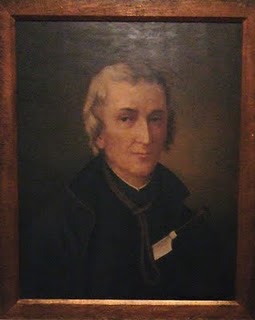
Portrait of St David Lewis in the Church of St Francis Xavier and St David Lewis, Usk

Two days ago, Sunday 26th August, the Annual Pilgrimage in honour of St David Lewis took place at Usk.  Despite the very wet summer we have experienced, the sun came out in all its splendour for the procession from Usk's Catholic Church to St Mary's Priory Church where the Martyr's remains are interred.  Below is a short video of the procession.


Mary in Monmouth has a good post about  Sunday's pilgrimage.  Click here to see it.

Monday, 27 August 2012

ST DAVID LEWIS, SUPERIOR OF THE CWM


Three hundred and thirty-three years ago today a Welsh Jesuit priest, Fr David Lewis, was executed at Usk.  His crime was to be a Catholic priest in a time when it was deemed High Treason to be a Catholic priest and to celebrate Mass in England. 
 
Plaque marking site of execution of St David Lewis
David Henry Lewis was a Monmouthshire man, born in Abergavenny in 1616.  He was the youngest of the nine children of Morgan Lewis and Margaret Pritchard.  Although David's Catholic mother brought up eight of the children in the Catholic Faith, David's Protestant father had David brought up in the Established Religion.
 
David attended the local grammar school of which his father was headmaster.   Later he went to London to study law.  He travelled to Paris as tutor to a young nobleman and while in Paris David converted to Catholicism.
 
After the deaths of his parents in 1638 David entered the English College in Rome to study for the priesthood.  He was ordained there in 1642.  Later, following in the footsteps of his Jesuit uncle, David entered the Jesuit Novitiate of Sant Andrea in Rome.  
 
After profession as a Jesuit, Fr Lewis was sent on the English Mission.  After only a year he was recalled to Rome to take up a position in his old college.  However, he soon returned to Wales and here he laboured among his own people for the remainder of his life.
 
He was twice Superior of the Jesuit College of St Francis Xavier at the Cwm, on the Monmouthshire-Herefordshire border.  According to a pamphlet published in London in 1679, the Cwm consisted of spacious houses with several entrances and secret passages between some of the rooms.  Underneath the buildings there were extensive cellars, accessible both from inside and outside the houses - useful strongrooms where valuables could be hidden.  From one room a tunnel ran out into the neighbouring woods, in which there were many caves.  Remote and secluded, the Cwm was an ideal meeting place for Catholics on both sides of the Anglo-Welsh border.


The site of the Jesuit College, The Cwm
The Cwm had been known to the government authorities since as early as 1660 and possibly earlier.  However it was not until December 1678 that the Lords ordered an investigation by the Bishop of Hereford, Herbert Croft.  Croft had the enthusiastic support and assistance of John Arnold, John Scudamore and Charles Price. 
 
By this time, all the priests had been evacuated from the Cwm.  In fact, the Superior, Fr David Lewis, was a prisoner in Monmouth Gaol and had been since his arrest at Llantarnam on 17th November 1678.  Some priests found shelter with recusant families, others, including Fr Philip Evans were imprisoned, and others, hunted like wild beasts, sheltered in caves or woods.
 
While the raid did not turn up any hidden priests, it did yield a store of church plate, vestments and books.  Bishop Croft added many of the stolen books to his Cathedral Library. 
 
 
Viewing some of the Cwm books in Hereford Cathedral Library
Recently we had the very great privilege of being permitted to view some of the confiscated books from the Cwm Library.   Dr Rosemary Firman, librarian of Hereford Cathedral, showed us several books which are known to have come from the Jesuit Library at the Cwm.  One of the books was inscribed with the name of Thomas Gunter.  Thomas Gunter had a secret chapel in his mansion on Cross St in Abergavenny where Frs David Lewis and Philip Evans said Mass and administered the Sacraments to the Catholics who crowded into the attic chapel.  Dr Firman imparted many interesting facts about the books and, quite honestly, we were more than a little awed to be looking at books which had very likely been held, consulted or  read by St David Lewis over three hundred years ago.
 
For some very interesting information about the Jesuit Library at the Cwm visit Hannah's excellent blog here
 
Fr David Lewis was executed at Usk on 27 August 1679.  He was beatified in 1929 and Canonised as one of the Forty Martyrs of England and Wales in 1970.

Sunday, 12 August 2012

ANNUAL PILGRIMAGE IN HONOUR OF ST DAVID LEWIS


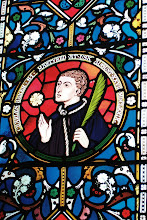
St David Lewis depicted in a stained glass window in the Catholic Church, Porth-y-Carne St, Usk

The Annual Pilgrimage in honour of St David Lewis will take place on Sunday 26th August 2012.  The programme is as follows:


3:00 p m:  Benediction of the Blessed Sacrament at the Catholic Church of SS Francis Xavier and St David Lewis, Porth-y-Carne St, Usk.
Ss Francis Xavier  & David Lewis Church, Porth-y-Carne St, Usk


Immediately Following Benediction, there will be a procession to the Martyr's grave at the Priory Church of St Mary, Usk.
The grave of St David Lewis, Priory Church, Usk

After a short service at the graveside, refreshments will be served in the Parish Hall, Porth-y-Carne St.

Thursday, 5 April 2012

DID YOU KNOW?

TEN FACTS ABOUT ST DAVID LEWIS:

1. David Lewis was born in Abergavenny in 1616. He was the youngest child of Margaret Pritchard, a Catholic, and Morgan Lewis, a Protestant.

2. One of nine children, David was brought up in the Established Religion by his father. David’s eight siblings were brought up in the Catholic Faith by their mother.

3. As a young man, during a stay in Paris, David converted to Catholicism.

4. David returned to Abergavenny in 1636 and lived with his parents until their deaths in 1638.

5. David decided to become a priest and, following the deaths of his parents in 1638, he entered the English College in Rome where he assumed the alias of Charles Baker. He was ordained there in 1642.

6. In 1645 David Lewis entered the Jesuit Novitiate at Sant’ Andrea. After profession he was sent to the Cwm, the Jesuit Headquarters in Herefordshire, on the English Welsh border.

7. David was soon recalled to Rome but in 1648 he returned to Wales where for more than thirty years he ministered to his beleaguered Catholic countrymen.

8. On 17th November 1678, while preparing to celebrate Holy Mass, Fr Lewis was arrested at a house in Llantarnam. He was conveyed to Monmouth Gaol where he was held until early 1679. On 13th January of that year he was moved to Usk Gaol to await his fate.

9. In March 1679, at The Monmouth Assizes, Fr Lewis was found guilty of being a Catholic priest and saying Mass. Under the Penal Laws of the time, this was considered High Treason and incurred the sentence of being hanged, drawn and quartered.

10. On 27th August 1679 Fr David Lewis was executed at Usk. Due to the love and respect the people had for this priest, known as ‘Tad y Tlodion’, i.e., ‘Father of the Poor’, he was allowed to hang until he was dead. He was then cut down and, although he was not quartered, he was disembowelled and beheaded. His remains were given a respectful burial in the churchyard of St Mary’s Priory Church, Usk.

Wednesday, 24 August 2011

THE EXECUTION OF ST DAVID LEWIS

THE EXECUTION OF ST DAVID LEWIS

On 27th August 1679, the Abergavenny born Jesuit, Fr David Lewis, was taken from Usk Gaol and conveyed to the site of his execution. The previous November he had been arrested as he prepared to say Mass at Llantarnam. In March 1679, at Monmouth Assizes, Fr Lewis had been condemned to be hanged drawn and quartered. His crime? He was a Catholic priest! In those dark times of suspicion and fear, the harsh Penal Laws against Catholics deemed it High Treason to be a Catholic priest, to celebrate Mass, and to carry out the duties of a priest. Having been found guilty of being a priest and saying Mass, Fr Lewis received the usual sentence handed out to traitors.

On that calamitous August day, Fr Lewis was tied to a hurdle, with his head at ground level, and dragged along the river path to a place known as the Island or the Coniger. The actual site is believed to be within the grounds of what is now Porth-y-Carne House, opposite the Catholic Church of St Francis Xavier and St David Lewis. Such was the love and respect of the people for Fr Lewis, known affectionately as "Tad y Tlodion", "Father of the Poor", that the executioner ran away and no one could be found to carry out the execution. Eventually, a miscreant was bribed to do the evil deed.

Usually, the condemned man would be hanged, cut down alive, his body ripped open and his entrails torn out and burnt before his eyes. His body would then be quartered and sent to be displayed in various prominent positions as a warning to others who might have the temerity to cling to the Old Faith. Fr Lewis was spared some of this agony because a Protestant man in the crowd held his hand and refused to allow him to be cut down until he was dead. When the priest was dead, he was cut down, drawn, and his body dismembered but not quartered.
An anonymous poet left an account of the execution in the local Welsh dialect. The following is an English translation.

Creatures of heavenly God,
And all others on earth,
Listen to me now
Giving voice to my lament
For the loss we have suffered
With the destruction of that innocent man
Under the crown. None was gentler
When he preached,
Both Welsh and English
All were filled with wonder
At the courage of the saint
Never faltering or once missing
A word of his entire sermon.
Tears flowed from men, women and children.

The martyred Fr David Lewis was permitted a decent burial. He was reverently carried in procession to the Priory Church of St Mary, Usk, and interred in the Churchyard. His grave is the nearest one to the main entrance of the church and there is an annual pilgrimage to this holy site. This year’s pilgrimage will take place on Sunday, 28th August. Holy Mass will be celebrated at 3:00 pm at the Catholic Church, Porth-y-Carne St, followed by the procession to the Saint’s grave.

Sunday, 7 November 2010

THE PERJURER TITUS OATES AND EIGHT JESUITS (PART 9)

ST DAVID LEWIS S J
One of nine children of a Protestant Headmaster and his Catholic wife, David Henry Lewis was born in 1616 at Abergavenny. David’s father, Morgan Lewis, saw to it that David was brought up in the Protestant religion although his other children were brought up Catholics. The young David attended King Henry VIII Grammar School, where his father was Headmaster, and then went on to London to study Law. David went on a trip to Paris and, while there, he converted to Catholicism. In 1636 he returned to Abergavenny and lived with his parents for two years. Whether Morgan Lewis was a Protestant through conviction or expediency one cannot say but about that time, 1636, Morgan Lewis also converted to the Catholic Faith.

In 1638, Morgan and Margaret (Pritchard) Lewis died of fever. David decided to beco
me a priest and, after his parent’s death and with the financial assistance of Fr Charles Gwynne (alias Brown), he entered the English College in Rome. Fr Gwynne, Rector of the Jesuit College at the Cwm, had obtained from his uncle, Hugh Owen, funds for maintaining a Welsh Scholar at Rome. David Lewis was ordained priest in July 1642 and in April of 1645 he entered the Jesuit Novitiate at Sant’ Andrea. Fr Lewis was sent to Wales in 1647 but was soon recalled to Rome to become Spiritual Director at the College there. However, in 1648 he returned to his homeland and the College of St Francis Xavier at the Cwm. For more than thirty years Fr David Lewis laboured for the people of Monmouthshire and the Welsh Marches. He served two terms as Rector of the College, commonly known as ‘The Cwm’.

Under the anti-Catholic laws of the time, being a Catholic was dangerous and being a Catholic priest was even more dangerous! The Welsh were, for the most part, tolerant of their Catholic neighbours, friends, and, in many cases, family members, who tenaciously clung to ‘the Old Faith’. The Catholics were commonly known by the lovely name of the ‘plant Mair’, that is ‘children of Mary’. However, there were those who, harbouring fierce hatred of Catholics, sought to eradicate them entirely. Consequently, the priests had to be very careful so as not to bring suffering on themselves or those who aided them. For this reason, Fr Lewis was in the habit of making dangerous journeys in the dead of night in order to care for his flock. The compassion and goodness of Fr David Lewis was not limited to Catholics only and his great kindness to all earned for him the name ‘Tad y Tlodion’, ‘Father of the Poor’.

For many generations the wealthy Morgans of Llantarnam were loyal Catholics. They were instrumental in the establishment of the Jesuit College at the Cwm and, as recusants, regularly paid heavy fines for themselves and others of their household who were fined for non-attendance at Protestant Services. They also maintained a Catholic Chapel in their home. Lady Frances Morgan was an aunt of Fr David Lewis and for a time he lived with the family at Llantarnam. From this base he brought the comfort of religion to the careworn Catholics of the area and regularly celebrated Holy Mass for them in the Morgan Chapel.

The Popish Plot was first brought to the attention of the King, Charles II, on 13th August 1678. The Popish Plot, also known as the Oates Plot, was the invention of a reprobate, the convicted perjurer Titus Oates. Charles did not believe a word of the so called ‘plot’ but certain politicians seized upon this opportunity to enforce the anti-Catholic Statutes and Laws which were still in force but not always acted upon. Considering the excommunication of Queen Elizabeth I, ill-advised Papal involvement with planned attacks upon England, and the failed Catholic plots of recent memory, it was not difficult for Oates and his partners in crime to convince the populace that King, country and the Protestant religion were endangered. It was easy to convince them that Catholics, led by the Jesuits, were plotting to kill the Protestant King and replace him with his Catholic brother, James. The Government offered a reward of £50 for the apprehension of any Catholic priest. By autumn 1668 the terror had begun. It spread throughout England and its foul fingers soon clutched at the ‘plant Mair’ in Wales.

Perceiving the danger in which he placed the Morgans, Fr Lewis moved out of their home to a cottage nearby. It was at this cottage at Llantarnam that Fr Lewis was arrested on 17th November 1678. It was a Sunday morning and the priest had been preparing to say Mass. He was arrested by armed dragoons, sent by the uncompromising and fanatical hater of Catholics and persecutor of priests, John Arnold of Llanvihangel Crucorney. Arnold, a Member of Parliament and Justice of the Peace, offered his own reward of £200 for the capture of any priest. Arnold had always shown friendship to Fr Lewis and right up to his imprisonment, the Jesuit believed Arnold to be a friend. Sadly, bigotry is without honour.

Fr David Lewis was imprisoned at Monmouth until January 1679. He was then moved to the new County Gaol at Usk. After a fixed trial at Monmouth Assizes, David Lewis was found guilty of being a Catholic priest and of saying Mass. He was condemned to be hanged, drawn and quartered. This was the usual sentence meted out to traitors and to be a Catholic priest was considered High Treason. In the spring, Fr Lewis, along with several other priests, was ordered to London to be examined by the despicable Oates and his equally despicable co-conspirators. No evidence could be found to implicate Fr Lewis in the imaginary plot so he was sent back to Usk to await his execution.

On 27th August 1679, Fr David Lewis was taken from Usk Gaol, tied to a hurdle, head towards the ground, and dragged along the river path to the place of execution. Fr Lewis was hanged but, mercifully, allowed to die before he was cut down and his body mutilated and decapitated. He was not quartered. It is an indication of the love the people had for the martyred priest that the authorities permitted his remains to be reverently carried to the churchyard of the Priory Church of St Mary. Here he was interred near the door of the west porch of the church.

The Popish Plot resulted in the deaths of many innocent Catholics, both priests and lay people. Some were executed, some died in prison and some died on the run, hunted like animals in the bitter winter weather. The eighth and final Jesuit to be executed as a direct consequence of the warped and evil mind of Titus Oates, Fr David Lewis S J, was beatified in 1929. On 25th October 1970 he was canonised by Pope Paul VI as one of the Forty Martyrs of England and Wales. An annual pilgrimage to the grave of St David Lewis, the Last Welsh Martyr, takes place on the Sunday nearest to 27th August.

LINKS TO THIS POST: The Perjurer Titus Oates and Eight Jesuits (Part 1); (Part 2); (Part 3); (Part 4); (Part 5); (Part 6); (Part 7); (Part 8)

Monday, 25 October 2010

FORTIETH ANNIVERSARY OF CANONISATION


On 25th October 1970, 10,000 English and Welsh pilgrims converged on Rome. They had come for the canonisation of the Forty Martyrs of England and Wales. During the dark days of the 16th and 17th centuries, almost 400 Catholic men and women gave their lives for their faith. On that wonderful day forty years ago, Pope Paul VI canonised forty of those courageous and faithful Catholics. The Last Welsh Martyr, Fr David Lewis S J, was among the forty.

For that joyful occasion, Sister Canisius, a Sister of St Joseph of Annecy at Llantarnam Abbey, composed a hymn in honour of St David Lewis. St David Lewis had lived for awhile at Llantarnam Abbey and from this base he ministered to the persecuted Catholics in the area. Llantarnam Abbey is near the site of the arrest of St David Lewis.
Here are the words of the hymn, sung to the tune of Hyfrydol. (You can even sing along with the video!)


HYMN IN HONOUR OF SAINT DAVID LEWIS

Holy Martyr, David Lewis,
Monmouth County's glorious Saint.
Father of the Poor they named you,
When you lived and toiled in Gwent.
Priestly work was undertaken,
Danger-fraught from dawn till dusk.
Gladly still you served your people,
Till you died for them at Usk.

From your capture at Llantarnam,
Through your time in Monmouth Gaol,
Threats and tortures could not shake you,
For your faith would never fail.
Bravely then you faced the gallows,
Crudely fashioned for your death,
Further torment someone spared you,
Till you drew your latest breath.

Great and glorious David Lewis,
Staunch and steadfast in the strife,
Bless your people here in Monmouth,
Those for whom you gave your life.
Help us to be strong, courageous,
Loyal to our loving God,
To Him then will glory flourish,
In the places you have trod.


To mark the fortieth Anniversary of the canonisation of St David Lewis and the Forty Martyrs of England and Wales, a very special ceremony took place yesterday 24th October 2010, at Usk, near the spot where Fr Lewis was martyred in 1679. After 10:00 a m Mass at the Church of St Francis Xavier and St David Lewis, Sr Celsus SSJ of Llantarnam Abbey unveiled a plaque which was then blessed by Fr Richard Reardon, the Parish Priest. The plaque, which was erected by the group Friends of St David Lewis, is at the side of the church on Porth-y-Carne Street and it marks the original stone which lay on the grave of the martyr. After the canonisation of Fr David Lewis, this old and broken stone was removed and a new one placed on his grave in the churchyard of St Mary’s Priory Church. The old stone was reassembled by the side of the Catholic Church where it remains to this day.

Saturday, 14 August 2010

IMPORTANT!

There are two important things I want to tell you about.

The first is that Jackie Parkes has a new blog, LEADKINDLYLIGHT. It is a great site so be sure to follow the link and have a look at it. You will be very pleased you did. And Jackie, good luck with the new blog. Knowing you, I know we can expect good things from leadkindlylight.

The second important thing is a reminder to those who live in or near USK.

The Annual Pilgrimage to the grave of LAST WELSH MARTYR, ST DAVID LEWIS, will take place on 29th August 2010. The proceedings will begin with the celebration of Holy Mass at 3 o'clock at the Catholic Church of St Francis Xavier and St David Lewis. The church is located on Porth-Y-Carne Street, Usk. After Mass, there will be a procession to the Saint's grave in the churchyard of the Priory Church. Following a short service at the grave, all are invited to the Parish Hall where light refreshments will be served.

If you are in the area on 29th AUGUST, make a note in your diary and come and pay your respects to a great Welsh Martyr and Saint.

Friday, 25 June 2010

CAN ANYONE SOLVE THE MYSTERY?

This interesting fragment of stone bears the inscription "DAVID LEWIS 1679". It was found in the churchyard of the Catholic Church in Usk but no one seems to know anything about its history. Knowledge of its age, origin, etc, seems to be lost in the mists of time. The stone, which has a small cross embedded in it, appears to be the remains of some sort of memorial to the martyred Welsh Jesuit. This stone may or may not be of any significance but, since the only purpose of this blog is to make St David Lewis better known, anything that has even a remote connection to our wonderful Saint is worth investigating, in so far as we are able. Not being professional historians or archaeologists, we are at a decided disadvantage. However, we are devoted to St David Lewis so we do our best with our limited talents. Whatever this curious artifact is, it must have a story and, important or not, it would be nice to know that story. Therefore, I am asking if anyone out there in Blog land has any knowledge of this object? I would be more than delighted to hear from you if you do. (FOR A BETTER VIEW OF THE STONE, CLICK ON THE PICTURE TO ENLARGE IT.)

Wednesday, 10 February 2010

ST DAVID LEWIS AT USK

Today, our blogging trip in the footsteps of St David Lewis takes us to Usk. Usk is a beautiful, peaceful little town but in 1679 it was the site of the Saint's imprisonment, and bloody martyrdom. On 27th August 1679, The Jesuit priest, Fr David Lewis, was dragged on a hurdle to the site of his execution. Earlier that year, at Monmouth Assizes, Fr Lewis had been condemned to be hanged, drawn and quartered. His crime? He was a Catholic priest! In those sad times of suspicion and fear, the harsh Penal Laws against Catholics deemed it High Treason to be a Catholic priest and to carry out the duties of a priest. Having been found guilty of being a priest, Fr Lewis received the usual sentence handed out to traitors. The photo below is of the river path along which Fr Lewis was taken to meet his death. He was tied to a hurdle, with his head at ground level, and dragged along the river path to a place known as the Island or the Coniger.
On a freezing cold and snowy 13th January 1679, St David Lewis was transferred from Monmouth Gaol to the new Prison at Usk (site pictured below). In March, Fr Lewis was returned to Monmouth to be tried at the Spring Assizes. Inevitably, he was found guilty and sent back to Usk Gaol to await his fate. In May the priest was again on the move. This time Fr Lewis, along with his cousin, the aged Fr John Kemble, was brought to London to be questioned by the infamous Titus Oates and his cronies. They tried to implicate him in the non existant Popish Plot but could not find anything against him. Lord Shaftsbury offered Fr Lewis his life and rich rewards if he would give evidence about the plot or renounce his Catholic Faith. St David Lewis stood firm and at his execution he declared "Discover a Plot I could not, for I knew of none, and conform I would not, because against my conscience it was ." He was again returned to Usk Gaol where he spent his final months.

On that awful day in August 1679, Fr David Lewis was martyred at Usk. The actual spot is believed to be within the grounds of what is now Porth-Y-Carne House, opposite the Catholic Church of St David Lewis and St Francis Xavier. A blue Usk Civic Society plaque marks the site. Such was the love and respect of the people for Fr Lewis, known affectionately in Welsh, as "Tad y Tlodion", "Father of the Poor", that the executioner ran away and no one could be found to carry out the execution. Eventually, a prisoner was bribed to do the the evil deed. Usually, the condemned man would be hanged, cut down alive, his body ripped open and his entrails torn out and burnt before his eyes. His body would then be quartered and sent to be displayed in various prominent positions as a warning to others. Fr Lewis was saved some of the agony because a Protestant man in the crowd held his hand and refused to allow him to be cut down until he was dead. Fr Lewis was then cut down, drawn, and his body dismembered but not quartered. It is recorded that many people in the crowd dipped cloths in the martyr's blood and some of the cloths survive today as precious relics of the holy martyr.


The Martyred Fr David Lewis was permitted a decent burial. He was reverently carried in procession to the Priory Church of St Mary (photo below) and interred in the Churchyard. His grave is the nearest one to the main entrance of the church.


In Penal Days, priests celebrated Holy Mass wherever they could - houses, barns or woods. After the execution of St David Lewis, a house in Usk where he used to say Mass was confiscated. The house today is a popular pub, known as The Cross Keys.
Fr David Lewis S J, was canonised in October 1970 by Pope Paul VI. Every year, on the Sunday nearest to 27th August, there is a pilgrimage to the grave of this holy Welsh priest, martyr and saint.
St David Lewis pray for us.
Related Posts with Thumbnails