Showing posts with label Pope Pius XI. Show all posts

Saturday, 20 June 2020

BLESSED JOHN ROCHE

John Roche was born in Ireland and, as a young man, he went to London where he found work as a servant and a waterman.  As was common at that time, Catholics often worked under an alias and Roche sometimes used the name of John Neale.  A devout Catholic, he became involved with Margaret Ward and others who were aiding persecuted priests.  One such priest was Fr William/Richard Watson.  
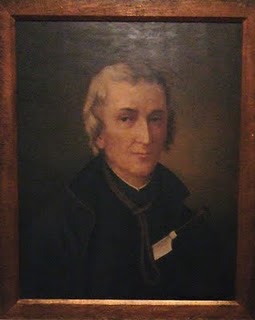
Blessed John Roche
Fr Watson had been arrested and tortured and, upon learning of this, Margaret Ward began visiting the priest in Bridewell Prison.  Eventually she devised a plan to help the priest escape.  She smuggled a length of rope into the priest and , at a prearranged time, he was to let himself down from his cell at the top of the prison.  She found two Catholic watermen who would be waiting nearby with a boat to spirit the priest away.  However, the two watermen lost their nerve and backed out.  Margaret did not give up!  John Roche readily agreed to assist the priest.  Disastrously, the rope was too short and the priest had to jump the remaining distance.  He crashed down onto a shed below, breaking his right arm and leg.  Immediately, John Roche ran to his assistance and carried him to the boat. 

Of course, the clatter had alerted the jailor and others and the rope, still dangling from the cornice, was discovered.  Margaret Ward, being Fr Watson's only visitor, was swiftly arrested.  

John had managed to get the priest to safety and he was recuperating in John's house.  When he had recovered, John swapped clothes with him and the priest got safely away.  Sadly, John, in the priest's clothes, was spotted by the jailor who arrested him. He was vigorously interrogated and  eventually admitted his role in the escape of Fr Watson.  He was charged with treason and condemned to death.  Offered a full pardon if he would seek the Queen's forgiveness and attend a Protestant service, John Roche refused both!

On 30th August 1588, John Roche and Margaret Ward were hanged, drawn and quartered at Tyburn. Four other Catholics, including Welshman Richard Flowers, were executed with them that day.  

On 15th December 1929, Pope Pius XI beatified John Roche. He is counted among the English Martyrs and is also venerated in Ireland where his feast is celebrated on 20th June. 

Tuesday, 12 November 2019

BLESSED PHILIP POWELL

Brecon has a proud history of loyalty to the 'Old Faith'.  Families such as  Powell and Lloyd have contributed much to the preservation of the Faith in that area and, as priests, shed their blood as Martyrs. One such priest was Philip Powell.
Blessed Philip Powell, O S B
Philip Powell was born at Trallong, Brecknockshire, to Roger ap Rosser Powell and Catherine Morgan on 2nd February 1594. Young Philip attended King Henry VIII Grammar School, Abergavenny.  The father of St David Lewis, Morgan Lewis, was headmaster and, being favourably impressed with Philip, recommended him to Dom Augustine Baker. Benedictine writer and mystic, Dom Augustine, was the uncle of Morgan's wife, Margaret, and therefore, a great uncle of St David Lewis.
Dom Augustine Baker, O S B
(Photo by J D Smith)

Dom Augustine, who was already supporting a seminarian, his nephew  John Pritchard, took on responsibility for young Philip Powell.  He supervised his law studies at Gray's Inn from 1610-14. Then, from 1614-19, and at Dom Augustine's expense, Philip was sent to Flanders to the University of Louvain, studying under Leander Jones, O S B.  He was ordained priest in 1618 and professed a monk on 15th August 1619.

On 7th March 1622, Fr Powell was sent on the English Mission.  For sixteen months he lived with Dom Augustine in Gray's Inn Lane, London.  In an attempt to elude the priest hunters, it was customary for priests working covertly on the English Mission to assume an alias.  Thus, Fr Philip Powell was also known as Philip Morgan or Philip Prosser.  For about twenty years Fr Powell worked in the areas of Cornwall, Devon and Somerset.  When Civil War erupted, the priest went to Cornwall and served as Chaplain to the Catholic soldiers in General Goring's army.  

After Goring's force disbanded, Fr Powell took ship for South Wales in an attempt to reach Monmouthshire.  Unfortunately, the ship was captured off Mumbles and on 22nd February 1646 Philip Powell was arrested by Captain Crowther.  Crowther kept him confined in the ship until 11 may when he sent him to London to be imprisoned in St Catherine's Gaol, Southwark.

Due to the terrible conditions and harsh treatment, Fr Powell became severely ill with Pleurisy.  His trial had been fixed for 30th May but it did not take place until 9th June.  He was tried in Westminster Hall, where he brilliantly defended himself.  Predictably, he was found guilty of being a priest and condemned to death. When the sentence of death was pronounced, Fr Powell exclaimed, "Oh what am I that God thus honours me and will have me to die for his sake?"  

On 30th June 1646, the sentence was carried out and Fr Philip Powell was hanged, drawn and quartered at Tyburn. He was 52 years old. He met his death with unshaken faith in the God he had so long served and therefore, with joy.  He is recorded as saying, "This is the happiest day and the greatest joy that ever befell me, for I am brought hither for no other cause or reason than that I am a Roman Catholic priest and a monk of the Order of St Benedict."  His remains were buried in the old churchyard at Moorfields, London.  A crucifix of his and some other relics are in the possession of Downside Abbey, Bath.

On 8th December 1929, Fr Philip Powell was Venerated when Pope Pius XI issued a decree of Martyrdom.  A week later, 15th December 1929, another steadfast son of Wales, Fr Philip Powell, was Beatified by Pope Pius XI.  
Blessed Philip Powell, pray for us.

Saturday, 11 February 2012

FORTY MARTYRS OF ENGLAND AND WALES

Who are the Forty Martyrs of England and Wales? They are a group of Catholic martyrs executed by the authorities during the Reformation. More than 600 Catholics, priests, laymen and women, are known to have died during the persecutions of the 16th and 17th centuries. Some offences were so trivial as to be almost unbelievable to us today. For instance, there were those who were executed for obtaining a papal license to marry. Then there was one Thomas Bosgrave. Bosgrave met on the road a priest named John Cornelius who was being taken away by the priest hunters. The priest had been hastily dragged off and was bareheaded. Thomas Bosgrave offered his cap to the priest and for this he was immediately arrested. Several months later Thomas Bosgrave was executed - for offering his cap to a priest!

The Forty Martyrs of England and Wales were selected from the hundreds who gave their lives for the Catholic Faith. As early as 1642 the first steps were taken to initiate the canonical process but owing to the ongoing persecutions the process had to be suspended. After the restoration of the Catholic Hierarchy in England and Wales in 1850 the Cause was resumed. Eventually, on 15th December 1929, Pope Pius XI beatified 136 of the martyrs. At last, after long and careful investigation and deliberation, three Carthusians, one Brigittine, thirteen secular priests, ten Jesuits, three Benedictines, two Franciscans, one Augustinian, four laymen and three laywomen were canonised by Pope Paul VI on 25th October 1970. Collectively, they are known as the "Forty Martyrs of England and Wales".

Before concluding this post, I think it right to remind ourselves that this unfortunate period of English history was a time of great upheaval in the country. It was a time of turmoil, suspicion, mistrust and of fear. In the 16th and 17th centuries, Protestants, Catholics and Non-Conformists all suffered for their religious beliefs, depending on who was in power at the time. Under Catholic Queen Mary hundreds of Protestants were burnt at the stake. Her father, Henry VIII, executed all who had the temerity to oppose him, notwithstanding their religious beliefs! Thank God we live in saner times, at least in this country. Surely it behoves us to pray for those who live in countries where to be a Christian still marks one out for persecution and death.

Tuesday, 31 August 2010

THE PERJURER TITUS OATES AND EIGHT JESUITS (PART 4)

BLESSED THOMAS WHITBREAD S J

In the 16th and 17th centuries, harsh laws were in force against Catholics and, according to Statute 27 Elizabeth, 1585, it was high treason to be a Catholic priest and to celebrate Mass. Of course, there were many who abandoned Catholicism for the new, Established Religion. However, there were also many who clung steadfastly to their Catholic Faith. Those Catholics remained loyal to their Sovereign but, in matters of religion, would not accept the Supremacy of the Crown.

For those who kept the Old Faith this meant practising their religion covertly. Priests were needed to minister to the Catholics so seminaries were established in various places on the Continent to train English boys and men for the priesthood. Knowing the grave dangers they faced, they returned as priests to their homeland to tend to the needs of their persecuted countrymen.

The Popish Plot, also known as the Oates Plot, was no plot at all. It was the product of the fertile and evil imagination of a known criminal, the convicted perjurer, Titus Oates. In August 1678, Oates alleged that there was a Catholic plot, inspired and led by the Jesuits, to murder the King, Charles II. The objective of this so called plot was to re-establish Catholicism in the country by replacing the Protestant Charles with his Catholic brother, James, Duke of York. Hatred and mistrust of Catholics was rife and memories of plots such as the Gunpowder Plot were still fresh. So it was an easy thing for Oates, with the connivance of certain politicians, to spread panic and fear throughout the country. His calamitous deception cost the lives of many innocent people, including eight Jesuit priests. Thomas Whitbread was one.

Thomas Whitbread was born in Essex in 1618. He studied at St Omer in Flanders and on 7th September 1635 he entered the Jesuit Novitiate. Ordained in 1645, Fr Thomas Whitbread (alias Thomas Harcourt) embarked upon the English Mission in 1647. In 1678, Fr Whitbread became the Jesuit Provincial and in this capacity he encountered Titus Oates at St Omer. Oates, after a very chequered and dubious past, had converted to Catholicism and applied to enter the Jesuits. Whitbread, exhibiting great perspicacity, refused him and had him expelled from the college. Titus Oates later declared that his conversion to Catholicism was feigned in order to infiltrate the Jesuits and learn their secrets! Oates returned to London where he met an old acquaintance, Israel Tonge. Tonge had long harboured hatred and suspicion of Catholics and, with his encouragement, Oates let loose the surge of persecution that enveloped the country.

Before dawn on 29th September 1678, Parliamentary soldiers, led by Oates, arrested Fr Whitbread and Fr Edward Mico. Both priests were suffering from plague and were too ill to be moved. By December Fr Mico had died but the Provincial was now well enough to be taken to Newgate Prison. Here he joined two other Jesuits, Frs William Ireland and John Fenwick. Fr Ireland and Fr Fenwick had been arrested by Oates the previous night.

On 17th December 1678, Fr Whitbread, Fr Ireland and Fr Fenwick were brought to trial at the Old Bailey. Fr Ireland was found guilty and sentenced to be hanged, drawn and quartered but the evidence against Fr Whitbread and Fr Fenwick was insufficient and they were remanded in prison.

Fr Whitbread again appeared at the Old Bailey on 13th June 1679. Lord Chief Justice Scroggs presided and Titus Oates and other criminals, liars and lowlife, were the witnesses for the prosecution. Scroggs ordered the jury to find the defendant guilty, which, needless to say, they did. The punishment for High Treason was to be hanged, drawn and quartered. At Tyburn, the 61 year old Jesuit suffered this barbarous execution on Friday, 20th June 1679. Before he was hanged, Fr Whitbread affirmed his innocence, forgave those whose lies had condemned him and then prayed silently until the cart was pulled away. Although Fr Whitbread’s body was cut down and quartered, some loyal and brave friends claimed his remains and buried them in the churchyard of St Giles in the Fields.

The Martyred Jesuit Provincial, Fr Thomas Whitbread, was beatified by Pope Pius XI on 15th December 1929.
LINKS TO THIS POST:

Tuesday, 24 August 2010

THE PERJURER TITUS OATES AND EIGHT JESUITS (PART 3)

BLESSED JOHN FENWICK John Fenwick was born in Durham, England, in 1628. Fenwick, whose real surname was Caldwell, was disowned by his Protestant parents when he converted to Catholicism. In 1654 he went to St Omer and, on 28th September 1656, he entered the Jesuit novitiate at Watten. He was ordained priest in 1664 and, returning to St Omer, he was made procurator of the College. In 1674, Fr Fenwick was sent upon the English Mission to work in the London area.

On the night of 28th September 1678, armed soldiers, led by that convicted perjurer, Titus Oates, entered his lodgings and arrested Fr Fenwick. Another Jesuit, Fr William Ireland, and an assistant, John Grove, were also taken prisoner. The three were incarcerated at Newgate Prison where they received harsh treatment. John Fenwick suffered so much from his chains and bolts that amputation of one of his legs was considered. This was decided against because the authorities were certain he would soon be convicted and executed anyway!

On 17th December 1678, Fr John Fenwick appeared at the Old Bailey and was tried for High Treason. Being a Catholic priest and saying Mass constituted High Treason! Because there was insufficient evidence to find the Jesuit guilty, he was sent back to prison. Witnesses had already testified but justice was not meant for Catholics, especially Catholic priests. Under the Penal Laws the only objective was to find priests guilty and execute them so the trial was postponed to a later date!

On 13th June 1679, Fr Fenwick again appeared at the Old Bailey for trial. Titus Oates and the equally corrupt Stephen Dugdale were witnesses against him. Lord Chief Justice William Scroggs instructed the jury to find the priest guilty. As expected, the jury complied and John Fenwick was found guilty of high Treason and sentenced to be hanged, drawn and quartered.

One week later, on Friday, 20th June 1679, Fr John Fenwick was taken to Tyburn in London. As he stood awaiting his fate, a messenger arrived shouting “A pardon, a pardon.” He delivered to the sheriff a document stating that the condemned man would be pardoned if he admitted his guilt and told all about the plot. The steadfast Fr Fenwick replied that he could acknowledge no guilt for a non-existent plot and would not lie to gain a pardon. The barbaric execution was carried out and the martyred priest’s remains were claimed by friends who buried them in the churchyard of St Giles in the Fields.

Jesuit martyr, Fr John Fenwick, was beatified by Pope Pius XI on 15th December 1929.
LINKS TO THIS POST:
THE ANNUAL PILGRIMAGE IN HONOUR OF ST DAVID LEWIS WILL TAKE PLACE ON SUNDAY 29TH AUGUST 2010. HOLY MASS WILL BE CELEBRATED AT THE CATHOLIC CHURCH, PORTH-Y-CARNE STREET, USK, AT 3 P M. MASS WILL BE FOLLOWED BY A PROCESSION TO THE MARTYR'S GRAVE WHERE A SHORT SERVICE WILL BE HELD. REFRESHMENTS WILL THEN BE SERVED IN THE PARISH HALL. ALL ARE WELCOME!

Tuesday, 17 August 2010

THE PERJURER TITUS OATES AND EIGHT JESUITS (PART 2)

THE FIRST JESUIT VICTIM, BLESSED WILLIAM IRELAND

William Ireland (alias Ironmonger) was born in Lincolnshire in 1636. In 1655, at the age of 19, he entered the Jesuit Novitiate and was ordained in 1667. In June 1677, Fr William Ireland was sent upon the English Mission, taking up work in London. Little more than a year later, 28th September 1678, he, Fr John Fenwick, and their assistant, John Grove, were arrested by a group led by the evil Titus Oates. The perjurer Oates was the instigator of the fabricated but deadly, Popish Plot. The two Jesuits and the layman, John Grove, were imprisoned in Newgate Prison where they were bound in heavy chains.

The three came to trial on 17th December 1678. At the trial, Titus Oates testified that in April the Jesuits had held a meeting to make plans to assassinate King Charles and place his Catholic brother, James, Duke of York, on the throne. Oates claimed to have been present at this meeting and that Frs Ireland and Fenwick and Mr Grove were also present. Fr Ireland, stated Oates, had been seen loitering about the royal residence during August. Fr Ireland had witnesses to prove that, at the time he was supposed to have been around the royal residence, he was actually in North Wales and the Midlands. Absurdly, the word of a convicted perjurer was taken over the word of reliable witnesses. Fr Ireland, John Grove and a Benedictine brother, Thomas Pickering, were found guilty of high treason and sentenced to be hanged, drawn and quartered.

The King, Charles II, never believed in the claims of Titus Oates and he postponed the execution. However, popular opinion, whipped up by certain politicians, was in agreement with Oates. Perhaps remembering his own father’s fate, the King allowed the executions to take place. On 24th January 1679, amid the taunts and insults of the people of London, Fr William Ireland was dragged to Tyburn. There he was hanged then cut down to be drawn and quartered.

The diabolical fabrication of the vile Titus Oates had claimed its first Jesuit martyr. Fr William Ireland was the first Jesuit to die during the frenzy generated by the Oates Plot but before it ended, seven more Jesuits, including St David Lewis, would be executed.

Fr William Ireland S J was beatified by Pope Pius XI in 1929.
LINKS TO THIS POST:
Related Posts with Thumbnails