

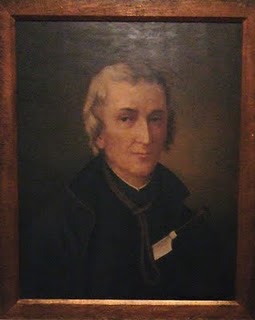
Oliver Plunkett was born in Loughcrew, County Meath, Ireland in 1629 to well-to-do parents. Desiring to become a priest, he set out for Rome in 1645. In 1646, he was admitted to the Irish College in Rome.
In 1654 Oliver Plunkett was ordained a priest and delegated by the Irish Bishops to act as their representative in Rome. Because of the extremely strict Penal Laws in force in Ireland at that time, it was many years before Fr Plunkett could return to his homeland. He served as theological professor at the College of Propaganda Fide and there, on 9th July 1669, he was appointed Archbishop of Armagh and was consecrated on 30th November at Ghent by the Bishop of Ghent, assisted by two Bishops, including the Bishop of Ferns.
The Restoration of the Monarchy in 1660 brought King Charles II to the throne and the new King wished to rule with tolerance for all his subjects. So, in March 1670, the Archbishop finally returned to Ireland. He received the pallium on 28th July 1670. Now that he was home, Archbishop Plunkett began the reorganising of the ravaged Catholic Church. He built schools both for the young and for the clergy and, in 1670, he established a Jesuit College in Drogheda. The Archbishop refused to sign the Test Act of 1673 and the college was razed to the ground and Plunkett went into hiding, travelling about in disguise.
In 1678, things became even worse for Catholics, particularly for Catholic priests! In England, the foul Titus Oates had concocted the fictitious Popish Plot and anti-Catholic hysteria was sweeping the country. Despite having a price on his head, Archbishop Plunkett refused to abandon his flock. He was arrested in Dublin in December 1679 and imprisoned in Dublin Castle. He was tried at Dundalk for conspiring against the state but this was unproven. The powerful and extremely anti-Catholic Lord Shaftsbury feared that Oliver Plunkett would never be convicted in Ireland so he had him moved to Newgate Prison in London. Even though the first grand jury found no true bill, the Archbishop was not released. At the second trial, which was claimed to be a kangaroo court, he was, as expected, found guilty of High Treason “for promoting the Roman faith” and he was condemned to be hanged, drawn and quartered.
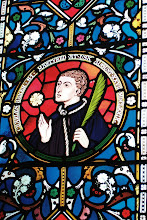
On 1st July 1681, Oliver Plunkett, Archbishop of Armagh and Primate of all Ireland, was hanged, drawn and quartered at Tyburn. Originally, his body was buried in two tin boxes. Exhumed in 1683, his remains were moved to various places before finally coming to rest at Drogheda, Ireland (his head), Downside Abbey, England, and Lamspringe, Germany.
Archbishop Oliver Plunkett was beatified in 1920 and canonised in 1975. St Oliver Plunkett was the last Catholic Martyr to be executed in England.
In 1654 Oliver Plunkett was ordained a priest and delegated by the Irish Bishops to act as their representative in Rome. Because of the extremely strict Penal Laws in force in Ireland at that time, it was many years before Fr Plunkett could return to his homeland. He served as theological professor at the College of Propaganda Fide and there, on 9th July 1669, he was appointed Archbishop of Armagh and was consecrated on 30th November at Ghent by the Bishop of Ghent, assisted by two Bishops, including the Bishop of Ferns.
The Restoration of the Monarchy in 1660 brought King Charles II to the throne and the new King wished to rule with tolerance for all his subjects. So, in March 1670, the Archbishop finally returned to Ireland. He received the pallium on 28th July 1670. Now that he was home, Archbishop Plunkett began the reorganising of the ravaged Catholic Church. He built schools both for the young and for the clergy and, in 1670, he established a Jesuit College in Drogheda. The Archbishop refused to sign the Test Act of 1673 and the college was razed to the ground and Plunkett went into hiding, travelling about in disguise.
In 1678, things became even worse for Catholics, particularly for Catholic priests! In England, the foul Titus Oates had concocted the fictitious Popish Plot and anti-Catholic hysteria was sweeping the country. Despite having a price on his head, Archbishop Plunkett refused to abandon his flock. He was arrested in Dublin in December 1679 and imprisoned in Dublin Castle. He was tried at Dundalk for conspiring against the state but this was unproven. The powerful and extremely anti-Catholic Lord Shaftsbury feared that Oliver Plunkett would never be convicted in Ireland so he had him moved to Newgate Prison in London. Even though the first grand jury found no true bill, the Archbishop was not released. At the second trial, which was claimed to be a kangaroo court, he was, as expected, found guilty of High Treason “for promoting the Roman faith” and he was condemned to be hanged, drawn and quartered.
On 1st July 1681, Oliver Plunkett, Archbishop of Armagh and Primate of all Ireland, was hanged, drawn and quartered at Tyburn. Originally, his body was buried in two tin boxes. Exhumed in 1683, his remains were moved to various places before finally coming to rest at Drogheda, Ireland (his head), Downside Abbey, England, and Lamspringe, Germany.
Archbishop Oliver Plunkett was beatified in 1920 and canonised in 1975. St Oliver Plunkett was the last Catholic Martyr to be executed in England.
LINKS TO THIS POST:




.JPG)

.JPG)


