Showing posts with label Sisters of St Joseph of Annecy. Show all posts

Thursday, 21 October 2010

CELEBRATING THE BIRTH OF FR JEAN PIERRE MEDAILLE


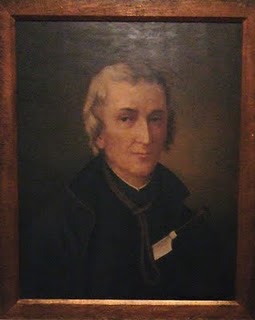
This year, the month of October is special for Sisters of St Joseph around the world. They are celebrating the 400th anniversary of the birth of their founder, Jean Pierre Médaille. Jean Pierre Médaille was born in Carcassonne in the south-west of France. According to the parish registers, Jean Pierre was born on 6th October 1610, to Phelippe and Jean Médaille. Jean Pierre was the eldest of three brothers. Jean Pierre was not quite sixteen when, on 15th September 1626, he entered the Jesuit Novitiate at Toulouse. While studying humanities and philosophy here in 1629, Jean Pierre became acquainted with a fellow student, Fr Francis Regis, who had been sent to the College in 1628. Fr Regis is better known to us today as the great Jesuit saint, Saint John Francis Regis. In 1637, at the age of 27, Jean Pierre was ordained priest. He was assigned to the Jesuit College in Aurillac as assistant to the rector.

In 1642, Fr Médaille returned to Toulouse for his final formal period of formation. A colleague at that time was Fr Noël Chabanel. At the end of this year of formation, Fr Chabanel was sent on mission to Canada where he was martyred in 1649. The youngest of the Canadian Martyrs, Fr Noël Chabanel was canonised in 1930.

About 1646 Fr Médaille formed an association of six women which was called the ‘Little Design’. This group of women, filled with love of God and neighbour, was dedicated to working for the disadvantaged and neglected. The group officially became known as the Congregation of the Sisters of St Joseph in 1650. On 15th October of that year the Bishop of LePuy gave them canonical status.

The French Revolution dealt a blow to the rapidly growing congregation. The sisters were dispersed, some were imprisoned and some even executed. However, in 1808 Mother St John Fontbonne, who had narrowly escaped execution, began the re-formation of the Sisters of St Joseph. The sisters became know by the Diocese in which they reformed and in 1833 the groups in Annecy Diocese joined with the Sisters from Pignerol, Italy. They became known as the Sisters of St Joseph of Annecy. The Sisters of St Joseph of Annecy came to Wiltshire, England in 1864. From there they spread throughout the country.

In 1946 the Sisters of St Joseph of Annecy moved to Llantarnam Abbey, Cwmbran. Llantarnam Abbey was the site of a Cistercian Abbey which was suppressed during the dissolution of the monasteries by King Henry VIII and his lackey, Thomas Cromwell. It eventually came into the ownership of the wealthy Morgan Family. Generations of the Morgans were Catholic and, despite the severe Penal Laws against Catholics, they maintained a chapel in their home where Catholics of the area could attend Mass. The Morgans were instrumental in establishing the Jesuit College of St Francis Xavier at the Cwm, Hereford. One of the Superiors of the College was Fr David Lewis.

Fr Lewis was born in Abergavenny in 1616. A Protestant, he converted to Catholicism and, in 1642, he was ordained priest. Following his uncle, John Pritchard, he joined the Jesuits in Rome and was sent on the English Mission in 1647. Except for a brief period in Rome, Fr David Lewis spent the remainder of his life ministering to the persecuted Catholics of Monmouthshire and surrounding area.

Lady Frances Morgan was an aunt of Fr David Lewis. For a time Fr Lewis lived at Llantarnam with his relatives and regularly celebrated Mass in the chapel there. From this base he administered the Sacraments and tended to the needs of the Catholics. During the alarm caused by the false Oates Plot, Fr Lewis wished to protect his relatives from danger so he moved to a cottage opposite.

One Sunday morning, 17th November 1678, Fr Lewis was preparing to celebrate Holy Mass. A group of armed dragoons arrived and arrested the priest. After months in prison, the Jesuit was tried and convicted of being a Catholic priest and celebrating Mass. This was deemed High Treason so Fr Lewis was sentenced to be hanged, drawn and quartered, the usual sentence for High Treason. On 27th August 1679, Fr David Lewis S J was martyred at Usk. His remains were interred in the churchyard of the priory Church at Usk. On 25th October 1970, David Lewis was canonised as one of the Forty Martyrs of England and Wales.

The Sisters at Llantarnam Abbey have continued to honour his memory and a portrait of the Saint who once lived there hangs in the hallway. Several years ago one of the Sisters from the Abbey founded a group, Friends of Saint David Lewis, which aims to spread devotion to St David Lewis. This Sister was also the driving force behind the installation of a plaque at the Old Post Office, Llantarnam, Cwmbran. The plaque marks the site of the arrest of St David Lewis.

Fr Jean Pierre Médaille died in the College of Billom on 30th December 1669. He was 59 years old. Fr Médaille could never have imagined the far reaching consequences of his work with that little band of women. The ripples have spread out to embrace the world and the good work started by Fr Medaille continues today through the dedicated and outstanding Sisters of St Joseph.

Friday, 19 March 2010

THE FEAST OF ST JOSEPH


On this, the Feast of St Joseph, we will explore briefly a link between St David Lewis and St Joseph.

The Sisters of St Joseph were founded at LePuy, France, in 1650 by Fr Jean-Pierre Medaille of the Society of Jesus. Fr Medaille was a noted teacher of philosophy who distinguished himself as a preacher and by his wonderful zeal for souls. The constitutions which Father Médaille wrote for the sisters are borrowed from the rules of St. Ignatius, the founder of the Jesuits to which Fr Medaille belonged.

This congregation had its martyrs! During the reign of terror, several Sisters of St. Joseph died for the Faith, and several others escaped the guillotine only by the fall of Robespierre. Among the latter was Mother St. John Fontbonne, who in her notebook records the names of four Sisters of St. Joseph imprisoned with her at St-Didier, five others in the dungeon of Feurs, and twenty in Clermont and other parts of France. The first use Mother St. John made of her liberty was to try to reassemble her dispersed community. The Sisters regrouped and reformed in various places and while all are Sisters of St Joseph as founded by Fr Medaille, they now carry the name of the place where they were reformed. Hence you will find The Sisters of St Joseph of Lyons, Sisters of St Joseph of Annecy, etc. Our link with St David Lewis is through the Sisters of St Joseph of Annecy.
In 1179, a Cistercian Abbey was founded at Llantarnam. It was a daughter house of Strata Florida. Owing to a 14th century fire and, two centuries later, the Reformation, little remains of the original Abbey. During the Reformation, the Abbey was dissolved. The property was acquired by William Morgan, a devout Catholic, who turned the Abbey into his family home. For generations, the Morgan Family held to their Catholic Faith and kept a chapel in their home where Catholics of the area could attend Mass. They were also instrumental in establishing the Jesuit College of St Francis Xavier at the Cwm, near Monmouth. St David Lewis a Welsh Jesuit, who was executed at Usk in 1679, lived for a time at Llantarnam with the Morgan Family. His Aunt was Lady Frances Morgan. Fr Lewis ministered to the Catholics of the area, saying Mass at the Morgan home, hearing Confessions, performing Baptisms, Weddings and generally tending to the needs of the persecuted Catholics. When the wave of persecution, generated by the Titus Oates Plot of 1678, broke over the country, Fr Lewis moved out of Llantarnam Abbey. He wished to prevent trouble being brought to the Morgans so, while continuing to serve the Catholics around Llantarnam, he moved into a cottage near the Abbey. It was here, on 17th November 1678, that the courageous Jesuit, Fr David Lewis, was arrested as he prepared to celebrate Holy Mass. He was tried and convicted of high Treason, that is, of being a Catholic priest and saying Mass. After a period of incarceration in various prisons, Fr Lewis was martyred at Usk on 27th August 1679.

In time, Llantarnam Abbey passed to various owners and in 1946, the “Residential & Agricultural Estate of Llantarnam Abbey” came on the market. The Sisters of St Joseph of Annecy, who were in need of larger premises, purchased the Abbey. That year, on 26th October, the Feast of Christ the King, Holy Mass was joyfully celebrated there for the first time in two hundred and sixty-eight years. The celebrant was Fr John Cahalane, Parish Priest of Our Lady of the Angels, Cwmbran.

St Joseph, the protector and foster father of the young Jesus, is the patron of the wonderful women who live at Llantarnam Abbey. Through their varied ministries, they spend their days living the word and the love of God. St Joseph is the quiet man of Scripture. Not one word of his is to be found in Scripture. We aren’t told much about him either, except that he was a just man and a righteous man. A man of great faith and trust in God, he did God’s will in all things. Today, St Joseph is the Patron of many countries and the Church rightly proclaims him Patron of the Universal Church. At Llantarnam Abbey, St Joseph is loved and revered by the Sisters of St Joseph of Annecy. They display many reminders and representations of their Patron Saint and there is a particularly beautiful statue of St Joseph in the well kept grounds of the Abbey. Nor is St David Lewis forgotten at the house in which he lived and celebrated Holy Mass. A portrait of the Martyr hangs in a place of honour at Llantarnam Abbey and the good Sisters treasure a relic of the Saint which they are proud to possess.

Today we honour St Joseph on this, his special day. Let us go to him in humble prayer and seek his aid in living faithful lives, open always to the will of God. Let us ask, too, the help of St David Lewis as we try to live our faith in a world where many have forgotten God.
LINKS TO THIS POST:

Sunday, 17 January 2010

RELICS OF ST DAVID LEWIS


The word “relic” comes from the Latin “reliquiae” and it means “remains”.

Saint Jerome said, “We do not worship, we do not adore, for fear that we should bow down to the creature rather than to the creator, but we venerate the relics of the martyrs in order the better to adore Him whose martyrs they are.”

In August 1679, at the execution of the Welsh Jesuit Martyr, Fr David Lewis, many Catholics were busy dipping cloths in the martyr’s blood. Within a short time of the martyrdom, cures were reported in Monmouthshire. These cures were attributed to the effectiveness of relics of the martyred priest.

There are many known relics of St David Lewis still in existence. At Stonyhurst, there are several small unidentified relics of David Lewis. A small travelling chalice owned by St David Lewis is kept at the Catholic Church in Abergavenny, the saint’s birthplace.

Pieces of the rope with which Fr David Lewis was hanged are in the possession of several churches in this country. The Jesuit house in Farm Street, London, is said to have two pieces, a church at Roehampton has a piece and the Church of St David Lewis and St Francis Xavier, Usk, also has a piece.

The most numerous relics of St David Lewis seem to be cloths stained with his blood. Erdington Abbey has large pieces of linen soaked in his blood. The Church at Usk, as well as its fragment of rope, has a piece of linen stained with his blood. The Carmelite Convent at Lanherne, Cornwall, has a piece of blood stained linen. The Sisters of St Joseph of Annecy at Llantarnam Abbey also treasure a piece of linen stained with the blood of the martyr.

At one time, when Llantarnam Abbey was a private house, it was owned by Lady Frances Morgan, an aunt of Fr David Lewis. For a time, the priest lived with his relatives and regularly said Mass in the chapel there. The spot where he was arrested is opposite the Abbey. The Catholic Church of St David Lewis and St Francis Xavier, Usk, is either on or directly opposite the site of the martyrdom of St David Lewis. It seems appropriate then that relics of St David Lewis are in the safe keeping of the Catholic Church in Usk and Llantarnam Abbey in Cwmbran.

Thursday, 31 December 2009

HONOURED AT LAST


Thanks to the devotion and perseverance of Sr Celsus, a Sister of St Joseph of Annecy, of Llantarnam Abbey, a public tribute was at last paid locally to Jesuit Martyr, St David Lewis. On Saturday, 17th November 2007, the Vicar General of Cardiff Archdiocese, Very Rev Canon Robert Reardon, himself a Cwmbran boy, unveiled a plaque at the Old Post Office, Llantarnam, the home of Mr and Mrs John O'Neill. Fr John Meredith, then Parish Priest of Cwmbran, blessed the plaque. Mr Stephen Brooks, K S S, was Master of Ceremonies. The plaque marks the site of the arrest of St David Lewis in 1678. In a corner of their front garden, John O'Neill and his wife, Wendy, have built a lovely Garden of Remembrance. Its focal point is the metal ring that once marked the site of the old smithy and the place of the martyr's arrest. The long overdue event was well attended by people from Cwmbran and surrounding area and Sister David Lewis S S J A, came from Devizes, Wiltshire, to be present at this service in honour of her Patron Saint.


THE METAL RING (A TYRING RING) WHICH ORIGINALLY MARKED THE SITE OF THE OLD SMITHY


Sunday, 8 November 2009

LLANTARNAM ABBEY AND ST DAVID LEWIS


Llantarnam Abbey, the Cistercian Abbey of the Blessed Virgin, was founded as a daughter house of Strata Florida Abbey about 1179. The Abbey was dissolved in 1536, after Henry VIII’s break with Rome. Llantarnam Abbey had four bells, weighing, in total, more than 38 cwt. The four bells were acquired by a William Jones of Caerleon, who paid the sum of £15 to have them taken down, the lead removed and melted down. It was reported that the lead weighed over 4 fothers. (1 fother = 2,000 lbs.)

In 1561, William Morgan acquired the dissolved Abbey from the Earl of Pembroke, to whom it had been granted by Queen Elizabeth in 1559. A new mansion was built from the stones of the Abbey and Morgan, a staunch Catholic, maintained in the house a Catholic Chapel. Lady Frances Morgan, an Aunt of The Jesuit Martyr, St David Lewis, married a descendent of William Morgan and lived at Llantarnam until her death in 1676. The property passed to her son, Sir Edward who, although a Deputy Lieutenant and a Justice of the Peace, held fast to the Old Faith. He also kept a Catholic Chapel which was frequently crowded with Catholics of the surrounding area. In 1670, the priest hunter, John Arnold, informed the House of Lords, that “At Llantarnam, an eminent papist’s house in Monmouthshire, there is a room fitted up chapel wise for saying of Mass where Fr David Lewis, a popish priest, hath said Mass for many years past”. Indeed, for several years Fr Lewis had lived at Llantarnam Abbey with his relatives and ministered to the Catholics in the area. Later, to avoid endangering his relatives, the priest moved to a nearby cottage adjoining the blacksmith's opposite the church of St Michael Llantarnam. However, Fr Lewis continued to say Mass in the Morgans’ Chapel. According to a helpful young lady at the Rights of Way Office, the present Public Footpath, which runs beside St Michael’s Church, has been legally registered since 1967 but has probably been there as long as the church itself . What route did the faithful priest take to the Abbey? Did he walk parts of this path across the fields on his way to celebrate Holy Mass?

In the 1830s, Reginald Blewitt, a relation of the Morgans, restored Llantarnam Abbey. Later, Sir Clifford Corey bought the Abbey and, later still, it became the property of the Government. During the Second World War, it was used as a storage depot by the R A F. In 1946 it was purchased by the Sisters of St Joseph of Annecy. That year, on 26th October, the Feast of Christ the King, Holy Mass was joyfully celebrated there for the first time in two hundred and sixty-eight years. The celebrant was Fr John Cahalane, Parish Priest of Our Lady of the Angels, Cwmbran.

A large metal ring in the pavement, originally a tyring platform used by the wheelwright, marked the site of the blacksmith’s in Llantarnam. That was providential because it also marked the site of Fr Lewis’s cottage and, later, the old Post Office. Today, the old Post Office is a private house. The owners have preserved the metal ring in a beautiful garden of remembrance, which they have lovingly created in honour of the last Welsh Martyr, St David Lewis.

Related Posts with Thumbnails