
 IT IS TIME I DID ANOTHER POST SO, SINCE I AM STILL IN NEWFOUNDLAND, I THOUGHT YOU MIGHT BE INTERESTED IN THE EARLY DAYS OF CATHOLICISM IN ENGLISH CANADA, PARTICULARLY IN NEWFOUNDLAND. THERE WERE NO MARTYRS BUT CERTAINLY PLENTY OF HARDSHIP!
Catholics who settled in Newfoundland suffered under the harsh Penal Laws, that body of discriminatory and oppressive legislation focused chiefly against Roman Catholics, but also against Protestant nonconformists.
Followers of Catholicism in English Canada faced great adversities in their efforts to establish their faith in the new country. This was partly due to the religious disdain of the English majority towards those who refused to conform to the tenets of the Protestant Reformation but also from animosity towards the ethnicity of those who professed Catholicism, particularly to the Irish. This antagonism was most intensely found in Newfoundland where, unlike in Canada, the Penal Laws were strictly applied. However, in spite of the influence the Irish had in English-speaking Canada, it is in Newfoundland that Irish Catholic mores run deepest.
Newfoundland’s rich resources of fish needed people to work in the expanding industry. In the seventeenth century, people from many parts of Ireland, especially Waterford, Wexford, Kilkenny and Tipperary, rose to the challenge and became seasonal visitors to the Island, working in the fisheries during the summer and returning home at the end of the fishing season in the Autumn. The English Merchants, who reaped the immense profits of the Newfoundland fishery, seldom paid these Irish workers so their financial lot was not improved. However, the fishery did provide them with cheap passage to America and the opportunity of eventually migrating to the American Colonies, where they hoped to find better conditions! Nonetheless, many Irish stayed and created a large and permanent Catholic presence in the Colony of Newfoundland. Under the Penal Laws, the Irish settlers stood little or no chance of either justice or mercy when accused of a crime. Irish Catholics were denied a defence counsel and had no way of knowing an indictment until it was read in court.
In Newfoundland at that time, the Catholic Church was an illegal institution and had great difficulty assisting the Irish in the Colony. Since it operated as an underground organization, its spiritual and religious role was restricted. Under the English Penal Laws, enacted from the reign of Queen Elizabeth I to that of King George III, when they were repealed in 1783, it was hoped to eliminate "Popery" by rendering it impossible for a Catholic to exist, except in the most degraded conditions imaginable. Catholics were barred from holding public office, from operating schools or sitting in parliament. Neither could they own property nor own a horse worth more than $5 and the practice of their religion was forbidden. As well as the Penal Laws, local orders were applied. Catholics could not bury their dead; only an Anglican minister was permitted to read the service of burial and collect a fee for doing so.
Rome was not unaware of its responsibility to the Catholic population and from 1535 to 1784, Newfoundland was under the administration of the Bishop of Rouen, then the Bishop of Quebec and then under the Vicariate of London. A number of itinerant priests were sent to Newfoundland and, at considerable risk, they traversed the rough terrain, covertly said Mass, and then moved on. Aware that Catholics were practising their religion by stealth, the local authorities hunted the itinerant priests who came to the Island disguised as fishermen. These priests hid, said Mass and fled. Punishment for participation in the Mass was severe. One account refers to a Michael Keating of Harbour Main who, in 1755, was fined $50 for allowing Mass to be celebrated in his fish store; his house was demolished, his goods were seized, and he was deported from the Colony. These men were under the constant threat of surveillance by Protestants who felt obliged to report their activities. One example, documented in 1755, stated: “ I am informed that a Roman Catholic priest is at this time at Harbour Grace, and that he publicly read mass which is contrary to the law and against the peace of our sovereign Lord, the King.”
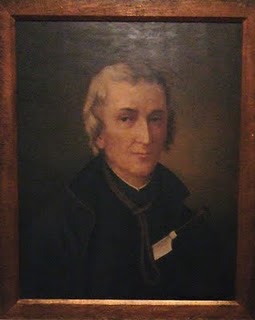
Conditions for Newfoundland's Catholics, predominantly Irish, gradually improved as the laws changed. In 1784, "liberty of conscience" was proclaimed in Newfoundland, the first Catholic chapel was built, and an Irish Franciscan, James Louis O'Donel, was appointed the first Roman Catholic Bishop of St. John's, Newfoundland. More priests came from Ireland and, in 1833, the Presentation Sisters arrived from Galway. The Presentation Sisters were followed by The Sisters of Mercy in 1842 and the Irish Christian Brothers in 1857. Advantages were gained when Catholics received the vote and were able to sit in the assembly and on the Legislative Council. For these early Catholic settlers to the Colony of Newfoundland, the struggle to obtain their religious rights was long and difficult. Be that as it may, the Newfoundland Irish expressed a unique culture in various dialects, crafts, and traditions which are still identifiable. The Irish language was commonly spoken among the Newfoundland Irish until the beginning of the nineteenth century, creating an Irish pattern of speech and vocabulary that is evident even today in Newfoundland English. The Catholic Faith, which was sown in suffering, perseverance and faithfulness, flourishes today and the many churches built with the pennies and free labour of poor Irish fishermen are their memorials.




.JPG)

.JPG)


