Showing posts with label The Cwm. Show all posts

Saturday, 19 December 2020

ON THIS DAY, 342 YEARS AGO

On 19 December 1678, 342 years ago today, the Jesuit College of St Francis Xavier at the Cwm, on the Monmouthshire Hereford border, was raided .  An order had been sent from the House of Lords on 7 December to Bishop Herbert Croft of Hereford to “find out the truth of the matter of fact concerning the said place called Combe, and to give this house a full account.”

THE SITE OF THE CWM
Bishop Croft organized the raid which was carried out by Captain John Scudamore. Captain Scudamore was energetically assisted by fanatical anti-Catholics, John Arnold and Charles Price.

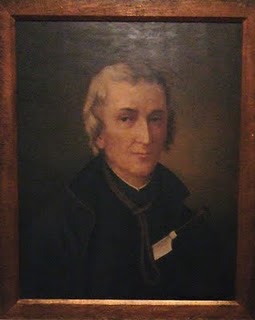
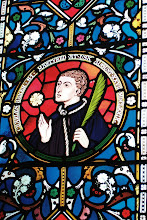
ST DAVID LEWIS
Fr David Lewis was Superior of the Cwm and realizing the danger, he had the College evacuated and the priests had removed or hidden as much property as possible.  The community was dispersed and the priests found shelter where they could.  Some were sheltered in the homes of local Catholics while others had to fend for themselves, sheltering in woods, barns or even pig stys.

They were dark days indeed and, for the priests of the Cwm, they were about to become darker.

THE SACK OF THE JESUIT COLLEGE

Saturday, 29 August 2020

341 YEARS AGO TODAY

ABERGAVENNY, BIRTHPLACE OF ST DAVID LEWIS
David Henry Lewis was born in Abergavenny in 1616. He attended King Henry VIII Grammar School in the town. At that time his father, Morgan Lewis, was Headmaster.  David then went to London to study law.  During a stay in Paris, David converted to Catholicism.  Returning to Abergavenny, David lived with his parents until their deaths.  After their deaths, he set out for Rome to study for the priesthood. Shortly after ordination, Fr Lewis joined the Jesuits.

KING HENRY VIII GRAMMAR SCHOOL
Sent on the "English Mission",   Fr David Lewis S J returned to his homeland. During that time of persecution it was usual for priests to work under an assumed name so David Lewis adopted the alias of Charles Baker.  For more than 30 years Fr Lewis laboured tirelessly for his flock. 

THE SITE OF THE CWM

Based at the Jesuit College of St Francis Xavier at The Cwm, David Lewis traversed the area, usually at night and on foot, ministering to the needs of the people.  His kindness and compassion knew no bounds and extended to all in need.  He was well loved and because of his care to all, he became known as "Tad y Tlodion", "Father of the Poor".

THE GUNTER MANSION, CROSS ST, ABERGAVENNY
It is recorded that Fr Lewis, as well as his fellow Jesuit, Fr Philip Evans, stayed with the Gunters of Cross Street, Abergavenny.  Relatives of David Lewis, the Gunters were staunch Catholics who had a secret chapel in their home.  The priests regularly said Mass there and conducted Catholic services.  David Lewis also stayed at the home of his aunt, Lady Frances Morgan, at Llantarnam.  The Morgans also had a chapel in their home where the priest celebrated Mass and ministered to the people of that area.

LLANTARNAM ABBEY, HOME OF THE MORGANS
The Popish Plot was a fabricated plot spread by the vile Titus Oates and his sordid ilk. When its poison  spread to Wales, Fr Lewis moved from the Morgan's home in an attempt to spare them any trouble that might befall him.  He rented a little cottage at Llantarnam, roughly opposite where the lovely old Church of St Michael and All Angels is situated.  

PLAQUE MARKING SITE OF ARREST OF ST DAVID LEWIS
Early on Sunday morning, 17 November 1678, Fr Lewis was preparing to celebrate Holy Mass. Suddenly, a group of armed dragoons burst into the cottage and arrested him.  Several days later he was incarcerated in Monmouth Gaol.  On a freezing cold day in January 1679, the Jesuit was moved to the prison at Usk. He had been found guilty of high treason for the 'crime' of being a Catholic priest and saying Mass!  Here he remained to await his execution.

THE FORMER USK GAOL 
On 29 August 1679, 341 years ago today, Fr David Lewis was taken from the Gaol on Bridge St and dragged on a hurdle along the river path to the place of his execution.  It was on a makeshift gallows at the hands of a makeshift hangman that Fr David Lewis  met his martyrdom.

THE RIVER PATH TODAY
On 25 October 1970, Pope Paul VI canonised Fr David Lewis S J and 39 other Reformation Martyrs.  They are known collectively as the "Forty Martyrs of England and Wales".  Today, the Catholic Church of Ss David Lewis and Francis Xavier stands opposite the site of his martyrdom and St David Lewis is remembered with a lovely shrine in his honour.  

ST DAVID LEWIS

"Blessed be God in His Angels and in His Saints".

Tuesday, 26 November 2013

MORE FROM HANNAH ON THE CWM LIBRARY

THE CWM
Hannah Thomas is still finding some extremely interesting facts about the Jesuit College of St Francis Xavier at the Cwm.  Her blog, The Cwm Jesuit Library at Hereford Cathedral,  is a mine of information and any history buffs out there would be doing themselves a great favour to look in to her latest posts.  You will find some riveting reading there.  Here is a link to her latest post.  Click here and treat yourself!

Sunday, 6 November 2011

THE CWM JESUIT LIBRARY AT HEREFORD CATHEDRAL

Well, just as I thought I could get back to some regular blogging my computer decided to go on strike. Fortunately it is still under guarantee so that was a bit of good luck! Anyway, it was taken away for repair or replacement and joy oh joy, it came back late yesterday! In celebration of its return, I am doing this small but important post.


There is a brilliant new blog that I think all readers of LAST WELSH MARTYR will be very interested in. This great blog is called The Cwm Jesuit Library at Hereford Cathedral and you will find it by clicking on the link.


Go ahead, pay Hannah a visit and treat yourself to some excellent reading!

Tuesday, 14 December 2010

THE SACK OF THE JESUIT COLLEGE

Early in the 17th century, with the financial backing of the Somersets of Raglan Castle and the Morgans of Llantarnam, the Jesuit College of St Francis Xavier was established at a place called the Cwm, on the Monmouth/Hereford Border. The selfless and heroic priests there ministered to the Catholics in that area and for many years, despite the severe anti-Catholic Laws, went about their work unmolested. For the most part, the authorities were content to turn a blind eye to the practices of their Catholic neighbours, the “plant Mair” as they were sometimes called. There were, however, some who harboured such fierce hatred of Catholics that they would stop at nothing in their efforts to eradicate every last vestige of the Old Faith. One such was John Arnold of Llanvihangel Court. Arnold was a Justice of the Peace and Member of Parliament whose main ambition in life appears to be the rooting out and elimination of all things Catholic. In this ambition Arnold was wholeheartedly supported by John Scudamore of Kentchurch and Charles Price of Llanfoist.

John Arnold and a number of like minded Protestants presented to Parliament a detailed account of Catholic activities in Monmouth and Hereford. They claimed to be alarmed at the growing strength of popery in the region. Arnold and Scudamore appeared before the House of Commons to expound their already wide-ranging account of Catholic activities. Of course, the Cwm was mentioned but there was no suggestion of any political activity there. Then Titus Oates and his Popish Plot burst onto the scene!
Originally, Fr David Lewis was the only Jesuit at the Cwm who was mentioned in the Plot. Later, when Chepstow born William Bedloe was inspired by monetary gain to throw in his lot with the perjurer Oates, Fr Charles Pritchard was accused of being one of the murderers of Sir Edmund Berry Godfrey. Things became very dangerous for the priests at the Cwm so Fr Lewis, who was the Superior, decided to evacuate the College. The priests hurriedly hid books, altar plate, vestments, and anything relating to Catholic service and practice. Then they dispersed, some to the homes of loyal friends but most to battle with the rough terrain and pitiless weather conditions.

In December 1678 the Lords ordered an investigation of the Jesuit College. The Bishop of Hereford, Herbert Croft, was appointed to head this investigation and he was enthusiastically assisted by John Arnold, John Scudamore and Charles Price. By this time, apart from a few servants, the College was deserted. The miscreants gleefully went about their work, removing books and papers from a room which had a hidden entrance. The Government ordered that all Catholic books were to be burnt and, should any be retained, these were to be catalogued. Many books disappeared but more than a hundred still survive in the library of Hereford Cathedral. These stolen books had been taken there by Bishop Croft to replenish the Cathedral’s own depleted library.

A collection of altar plate seized in the raid came into the hands of Charles Price. Despite orders to the contrary, he refused to hand over the ill-gotten loot. The Privy Council commanded that all title deeds to Jesuit property should be sent immediately to Whitehall. However, nothing was forthcoming and Bishop Croft was ordered to appoint someone to administer the Cwm in the interest of the Crown.

The lease on the premises did not expire until 1737 but tragically the Cwm was never again occupied by a Jesuit presence. Most of the original College was demolished and, in 1830, the present house was built. Some oh so appropriate lines of T S Eliot’s “Murder in the Cathedral” come to mind; “From such ground springs that which forever renews the earth though it is forever denied.”

Sunday, 7 November 2010

THE PERJURER TITUS OATES AND EIGHT JESUITS (PART 9)

ST DAVID LEWIS S J
One of nine children of a Protestant Headmaster and his Catholic wife, David Henry Lewis was born in 1616 at Abergavenny. David’s father, Morgan Lewis, saw to it that David was brought up in the Protestant religion although his other children were brought up Catholics. The young David attended King Henry VIII Grammar School, where his father was Headmaster, and then went on to London to study Law. David went on a trip to Paris and, while there, he converted to Catholicism. In 1636 he returned to Abergavenny and lived with his parents for two years. Whether Morgan Lewis was a Protestant through conviction or expediency one cannot say but about that time, 1636, Morgan Lewis also converted to the Catholic Faith.

In 1638, Morgan and Margaret (Pritchard) Lewis died of fever. David decided to beco
me a priest and, after his parent’s death and with the financial assistance of Fr Charles Gwynne (alias Brown), he entered the English College in Rome. Fr Gwynne, Rector of the Jesuit College at the Cwm, had obtained from his uncle, Hugh Owen, funds for maintaining a Welsh Scholar at Rome. David Lewis was ordained priest in July 1642 and in April of 1645 he entered the Jesuit Novitiate at Sant’ Andrea. Fr Lewis was sent to Wales in 1647 but was soon recalled to Rome to become Spiritual Director at the College there. However, in 1648 he returned to his homeland and the College of St Francis Xavier at the Cwm. For more than thirty years Fr David Lewis laboured for the people of Monmouthshire and the Welsh Marches. He served two terms as Rector of the College, commonly known as ‘The Cwm’.

Under the anti-Catholic laws of the time, being a Catholic was dangerous and being a Catholic priest was even more dangerous! The Welsh were, for the most part, tolerant of their Catholic neighbours, friends, and, in many cases, family members, who tenaciously clung to ‘the Old Faith’. The Catholics were commonly known by the lovely name of the ‘plant Mair’, that is ‘children of Mary’. However, there were those who, harbouring fierce hatred of Catholics, sought to eradicate them entirely. Consequently, the priests had to be very careful so as not to bring suffering on themselves or those who aided them. For this reason, Fr Lewis was in the habit of making dangerous journeys in the dead of night in order to care for his flock. The compassion and goodness of Fr David Lewis was not limited to Catholics only and his great kindness to all earned for him the name ‘Tad y Tlodion’, ‘Father of the Poor’.

For many generations the wealthy Morgans of Llantarnam were loyal Catholics. They were instrumental in the establishment of the Jesuit College at the Cwm and, as recusants, regularly paid heavy fines for themselves and others of their household who were fined for non-attendance at Protestant Services. They also maintained a Catholic Chapel in their home. Lady Frances Morgan was an aunt of Fr David Lewis and for a time he lived with the family at Llantarnam. From this base he brought the comfort of religion to the careworn Catholics of the area and regularly celebrated Holy Mass for them in the Morgan Chapel.

The Popish Plot was first brought to the attention of the King, Charles II, on 13th August 1678. The Popish Plot, also known as the Oates Plot, was the invention of a reprobate, the convicted perjurer Titus Oates. Charles did not believe a word of the so called ‘plot’ but certain politicians seized upon this opportunity to enforce the anti-Catholic Statutes and Laws which were still in force but not always acted upon. Considering the excommunication of Queen Elizabeth I, ill-advised Papal involvement with planned attacks upon England, and the failed Catholic plots of recent memory, it was not difficult for Oates and his partners in crime to convince the populace that King, country and the Protestant religion were endangered. It was easy to convince them that Catholics, led by the Jesuits, were plotting to kill the Protestant King and replace him with his Catholic brother, James. The Government offered a reward of £50 for the apprehension of any Catholic priest. By autumn 1668 the terror had begun. It spread throughout England and its foul fingers soon clutched at the ‘plant Mair’ in Wales.

Perceiving the danger in which he placed the Morgans, Fr Lewis moved out of their home to a cottage nearby. It was at this cottage at Llantarnam that Fr Lewis was arrested on 17th November 1678. It was a Sunday morning and the priest had been preparing to say Mass. He was arrested by armed dragoons, sent by the uncompromising and fanatical hater of Catholics and persecutor of priests, John Arnold of Llanvihangel Crucorney. Arnold, a Member of Parliament and Justice of the Peace, offered his own reward of £200 for the capture of any priest. Arnold had always shown friendship to Fr Lewis and right up to his imprisonment, the Jesuit believed Arnold to be a friend. Sadly, bigotry is without honour.

Fr David Lewis was imprisoned at Monmouth until January 1679. He was then moved to the new County Gaol at Usk. After a fixed trial at Monmouth Assizes, David Lewis was found guilty of being a Catholic priest and of saying Mass. He was condemned to be hanged, drawn and quartered. This was the usual sentence meted out to traitors and to be a Catholic priest was considered High Treason. In the spring, Fr Lewis, along with several other priests, was ordered to London to be examined by the despicable Oates and his equally despicable co-conspirators. No evidence could be found to implicate Fr Lewis in the imaginary plot so he was sent back to Usk to await his execution.

On 27th August 1679, Fr David Lewis was taken from Usk Gaol, tied to a hurdle, head towards the ground, and dragged along the river path to the place of execution. Fr Lewis was hanged but, mercifully, allowed to die before he was cut down and his body mutilated and decapitated. He was not quartered. It is an indication of the love the people had for the martyred priest that the authorities permitted his remains to be reverently carried to the churchyard of the Priory Church of St Mary. Here he was interred near the door of the west porch of the church.

The Popish Plot resulted in the deaths of many innocent Catholics, both priests and lay people. Some were executed, some died in prison and some died on the run, hunted like animals in the bitter winter weather. The eighth and final Jesuit to be executed as a direct consequence of the warped and evil mind of Titus Oates, Fr David Lewis S J, was beatified in 1929. On 25th October 1970 he was canonised by Pope Paul VI as one of the Forty Martyrs of England and Wales. An annual pilgrimage to the grave of St David Lewis, the Last Welsh Martyr, takes place on the Sunday nearest to 27th August.

LINKS TO THIS POST: The Perjurer Titus Oates and Eight Jesuits (Part 1); (Part 2); (Part 3); (Part 4); (Part 5); (Part 6); (Part 7); (Part 8)

Thursday, 22 July 2010

FATHER CHARLES BROWN S J

Charles Brown was in fact, the alias of Fr Charles Gwynne. Like most priests in England during Penal Times, he refrained from using his real name for safety reasons. He sometimes used the names of ‘Bodvel’ or ‘Bodwell’. Charles Gwynne was born in 1582, the son of Thomas Wynn of Boduan, Pwllheli, and Elizabeth, daughter of Owen ap Gruffydd of Plas Du. They brought up their son Charles in the Protestant religion. While on a visit to his mother’s brother, Hugh Owen, in Brussels, Charles was reconciled to the Catholic Church by Fr J Chambers. Charles entered the English College in Rome and was ordained there in 1613. He became a Jesuit in 1620.

In 1623, Fr Brown was sent on the Welsh mission of St Francis Xavier. In 1625 he became its Rector, succeeding Fr John Salisbury, and was instrumental in establishing the mission’s headquarters at the Cwm, Llanrothal. The Morgans of Llantarnam were generous benefactors. Fr Brown secured from his uncle, Hugh Owen, funds for maintaining a Welsh scholar at Rome. Coincidentally, it was this fund which made it possible for Fr Brown to enable a future Rector, David Lewis, to enter the English College in 1638. (David Lewis was martyred in 1679 and canonised in 1970.)

In 1618, Fr Brown inherited Hugh Owen’s fortune. To commemorate his munificent uncle, Fr Brown erected a tablet to his memory at the English College in Rome.

Fr Charles Brown was another Welsh Jesuit who, under hazardous circumstances, played a major part in the life of the Cwm and the continuance of the Catholic Faith in Wales. This dedicated priest died in 1647.
FOR RELATED POSTS CLICK BELOW.
ANNUAL PILGRIMAGE IN HONOUR OF ST DAVID LEWIS
SUNDAY, 29th AUGUST 2010
3:00 p m - MASS AT SS FRANCIS XAVIER AND DAVID LEWIS CHURCH, PORTH-Y-CARNE STREET, USK
PROCESSION TO THE MARTYR'S GRAVE
REFRESHMENTS IN THE PARISH HALL

Tuesday, 20 July 2010

“VIR PRUDENS ET PIUS”


One of nine children, David Henry Lewis was born in 1616 in Abergavenny, Monmouthshire. His parents were Morgan Lewis and Margaret Pritchard. Morgan Lewis, a Protestant, was headmaster of King Henry VIII Grammar School in the town. Margaret Pritchard was a devout Catholic and she brought up eight of their children as Catholics but Morgan saw to it that their son David was brought up in the Protestant religion. Until the age of sixteen, David was educated at the local grammar school where his father was headmaster. He then went to London to study law.

It was while David was studying in London that he went on a visit to Paris. During this time in Paris he became a Catholic. In 1636, the young man returned to Abergavenny and lived with his parents until their deaths in 1638. Fr Charles Brown S J (vere Charles Gwynne) was then the Jesuit Superior of Wales and the other counties which came under the mission of St Francis Xavier. It was under the patronage of Fr Brown that David Lewis set off, in August 1638, for the English College in Rome. Upon his entrance to the College in November of that year, he assumed the name of Charles Baker. The College Diary notes, “Charles Baker, vere David Lewis, a South Welshman of the County of Monmouth was admitted as an alumnus November 6th 1638”. Because of the perilous conditions existing under the anti-Catholic Penal Laws in England at that time, it was common practise for those destined for the English Mission to assume an alias. David was ordained priest on 20th July 1642 and in April 1645 he entered the Jesuit novitiate of Sant’ Andrea in Rome. The newly professed Jesuit was sent back to Wales but he was quickly recalled to Rome to take up a position at his alma mater. However, 1648 saw the return of Fr David Lewis S J to Wales and to the Jesuit mission of St Francis Xavier at the Cwm, near Llanrothal. Here he would spend the rest of his life ministering in the area of Monmouth and the Welsh marches.

It was a dangerous time for Catholics in general but for priests in particular. Many of the authorities in Wales turned a blind eye to their Catholic friends, neighbours, and in some cases, family members, who clung to “The Old Faith”. Nonetheless, the priests had to work in secret, mainly at night. The administrative centre for the area was at the College of St Francis Xavier at the Cwm. Fr David Lewis served two periods as Superior, from 1667 – 1672 and then again from 1674 – 1678.

When the Oates Plot, the preposterous invention of the fetid mind of Titus Oates, engulfed the country in the autumn of 1678, there were about six priests at the Cwm, including the Superior, Fr David Lewis, his good friend Fr Ignatius (Walter) Price and Fr Charles Pritchard. Only one of the priests at the Cwm, the Superior, Fr David Lewis, had been named by Oates in his fairytale. Oates claimed that he had seen a papal bull naming those who would hold positions of authority upon the success of the plot and, he maintained, this papal bull had stated that the See of Llandaff would be given to Fr David Lewis. Upon the mysterious death of Sir Edmund Berry Godfrey, the magistrate appointed to investigate the plot, a Chepstow born degenerate entered the scene. Lured by the prospect of a reward, William Bedloe joined Oates in his evil pursuit and the innocent Fr Pritchard’s name also became linked with the plot. Bedloe asserted that Godfrey had been murdered by three Jesuits and one of them was Fr Charles Pritchard. That, of course, was impossible because it is on record that Fr Pritchard, who carried on his priestly ministry for sixteen years, had never in all that time left the South Wales area.

The Rector, Fr Lewis, was astute enough to see that they were all in grave danger and he immediately evacuated the Cwm. Some of the priests were sheltered in the homes of courageous Catholics. Others, like Fr Ignatius Price, took to the woods and hills and, while still carrying on their covert ministry, had to sleep in caves or barns.

Fr Lewis lived for a time with his relatives, the Morgans, at Llantarnam but, so as not to place them in danger, he moved to a nearby cottage. It was at this cottage that Fr Lewis was arrested early on Sunday morning, 17th November 1678, as the priest was preparing to celebrate Holy Mass. He was imprisoned at Monmouth Gaol until January 1679 when he was moved to Usk Gaol. On 27th August 1679, the Jesuit was taken from Usk Gaol and, tied to a hurdle, he was carried along the river path to the place of execution. There he was executed for the crime of being a Catholic priest and for saying Mass. He was buried in the churchyard of the Priory Church, Usk. Next to the earlier entry in the Diary of the English College, Rome, a poignant note was added, “Vir prudens et pius. (A devout and prudent man.) Hanged for the Faith and the priesthood in the year 1680 in Wales.”

Beatified in 1929, Fr David Lewis S J, was canonised by Pope Paul VI on 25th October 1970 as one of the Forty Martyrs of England and Wales. There is an annual pilgrimage to the Martyr’s grave on the Sunday nearest to the 27th August.

FOR RELATED POSTS CLICK ON THE LINK:

PILGRIMAGE DETAILS FOR 2010:
Sunday, 29th August, 2010
3:00 p m – Mass at SS Francis Xavier and David Lewis Church, Porth-Y-Carne St, Usk;
Procession to the grave of St David Lewis;
Refreshments in the Parish Hall.

Friday, 16 July 2010

FATHER CHARLES PRITCHARD, S J

(THE CWM AS IT IS TODAY)

When the poison of the Oates Plot spewed over the country in 1678, Fr Charles Pritchard was one of the Jesuits at the College of St Francis Xavier at a place called the Cwm, near Llanrothal in Monmouthshire. This priest of “meekness and simplicity” was soon to be engulfed in a terrifying ordeal.

Sir Edmund Berry Godfrey was the London magistrate appointed to investigate the Oates Plot and when he was found dead in mysterious circumstances, Catholics came under suspicion. A reward of £500 was offered for the discovery of the murderer /murderers. It was then that the professional criminal and perjurer, William Bedloe, inspired by the reward of £500, came on the scene. In November, Bedloe appeared before the Lords and announced that Godfrey had been murdered by three Jesuits. One of the Jesuits, claimed Bedloe, was Fr Charles Pritchard. Since, as confirmed by the Jesuit Provincial letter for 1680, Fr Pritchard had been on the English mission for sixteen years and in all that time, he had never left South Wales, he could not have played a part in Godfrey’s murder in London. Bedloe, purporting to be a trusted emissary of the Jesuits, also declared that Fr Prichard was his informant! Of course, this was all fantasy, for why would the Jesuits, who carried out their ministry at great risk to themselves, trust a known felon and perjurer? However, with Oates and Bedloe avidly spreading their vicious lies and certain politicians using them to their own advantage, the ashes of anti Catholicism were soon fanned into a raging inferno.

Intoxicated with the celebrity status he was now enjoying and the success of his fabrications so far, Bedloe went on to dizzying heights of fictional accusations. He asserted that he had learned of plans for uprisings all over Wales and that every noteworthy Catholic in the country was aware of the plot. Some of this information, fanaticised Bedloe, had come from the Rector of the Cwm, Fr David Lewis. Fr Charles Pritchard, according to Bedloe, was to murder the Duke of Buckingham and Bedloe himself had been offered £4,000 to commit a murder!

The son of James and Elizabeth Pritchard, Charles Pritchard was born in 1637 at Blaen Llymman, Monmouthshire. He became a Jesuit in 1663 and around 1667 he embarked upon the English mission. He spent the remainder of his life ministering in the South Wales area, particularly Monmouth.

In light of the Oates Plot and Beldoe’s preposterous accusations, Fr Lewis grasped the gravity of the situation and decided to evacuate the Cwm, and the priests were dispersed. Some were sheltered by Catholic families but some had to take to hiding in woods and countryside.

Fr Pritchard now had a price on his head. A reward of 80 gold Crowns was offered for his capture and conviction. Despite this, for six months the priest was sheltered in the home of an unidentified faithful friend in the area of Monmouth. By day he remained hidden but at night Fr Pritchard emerged to attend to the needs of Catholic families in the area. Under such conditions, Fr Pritchard’s health suffered greatly and one dark night, whilst engaged in the visitation of his flock, he suffered a fall. As a result of this fall, the courageous Jesuit died in his friend’s house on 14th March 1680. He was buried secretly in the garden. At 43 years of age, Fr Charles Pritchard, S J, had given his life in the service of the oppressed Catholics of South Wales.

*FOR RELATED POSTS, SEE

http://lastwelshmartyr.blogspot.com/2010/07/jesuit-college-at-cwm.html

http://lastwelshmartyr.blogspot.com/2010/01/father-ignatius-price-s-j.html

Tuesday, 13 July 2010

THE JESUIT COLLEGE AT THE CWM

In 1595 Fr Robert Jones arrived in England. The Jesuit General, Aquaviva, had sent him to assist Fr Robert Persons, Prefect of the English Jesuits. Fr Persons wished to provide for the needs of the many faithful Catholics in Wales. By 1605, Fr Jones had established a Jesuit mission closely involving the Welsh Jesuits, the Welsh Secular clergy and recusant gentry. This was largely financed by the Morgans of Llantarnam. Lady Frances (Somerset) Morgan was one of Fr Jones’s converts and Fr Jones sometimes lived at Llantarnam. This financial support made it possible to maintain two Jesuits in North Wales and two in South Wales. When Fr Jones died in 1615, Fr John Salisbury succeeded him as Superior of the North and South Wales Districts. Raglan Castle was a major Catholic centre and Fr Salisbury went to live there. The generous and continued support of the Morgans of Llantarnam and the Somersets of Raglan Castle enabled him to lease and eventually buy the farm known as the Cwm and to found there in 1622 the Jesuit College of St Francis Xavier. Over the years, the College of St Francis Xavier housed many priests, Seminary priests as well as Jesuits. It is interesting to note that, according to Br Henry Foley, Fr John Lloyd and Fr David Lewis were together at the Cwm in 1655. Fr John Lloyd was a secular or seminary priest who was martyred at Cardiff just days before Fr Lewis was martyred at Usk.
(THE RUINED CHAPEL AT RAGLAN CASTLE - CLICK ON
PHOTOS TO ENLARGE THEM)
Fr David Lewis served two terms as Rector of the Cwm, 1667 – 1672 and again from 1674 – 1678. As early as 1660 the Government authorities had know of the existence of the College of St Francis Xavier at the Cwm. The priests went about openly and unmolested until Titus Oates exploded upon the scene in 1678. Titus Oates was a detestable character who hated Catholics in general and Jesuits in particular. He claimed to have uncovered a plot to restore Catholicism to England by murdering the King, Charles II, and putting his Catholic brother James Duke of York on the throne. The King himself did not believe a word of the Plot but among a populace that believed Catholics responsible for the Great Fire of London as well as the Plague, it was easy for certain politicians to use the plot to serve their own purposes. The Oates Plot took wings and before it had ended, many innocent Catholics up and down the country had lost life and liberty.

Only two Jesuits at the Cwm were named in the spurious plot, Fr Charles Prichard and the Rector, Fr David Lewis. Fr Lewis was aware of the seriousness of the situation and decided to evacuate the Cwm and the priests dispersed. Some found shelter with Catholic families but most had to hide in woods, barns or caves. Through it all, those courageous and faithful priests, travelling by night and on foot, ministered to their scattered flocks. The Government ordered the Bishop of Hereford, Herbert Croft, to investigate the Cwm and in December 1678, Croft, with the exuberant assistance of John Arnold, John Scudamore and Charles Price, raided the College. The buildings were ransacked and among items taken away were the books from the Cwm’s extensive library. Many of the books were stolen by Croft to restock the library of Hereford Cathedral, which had been rifled by Cromwell’s Roundheads. About 100 volumes can still be seen in Hereford Cathedral Library.

The lease on the Cwm did not expire until 1737 but after 1678, it was never again occupied by Jesuits. Eventually, the old house, which was said to have at least two priest holes, was demolished. In 1830 the present house was built. Today, the Cwm, nestled in gentle countryside, is a beautiful Bed and Breakfast Hotel. Catholicism in South Wales never fully recovered! Neither did it die out so the priests who tended the Catholics of Monmouth and the Welsh marches did not suffer or die in vain. The Faith lives on and their memory is revered.

Monday, 30 November 2009

IMPRISONED AT USK


On Monday, 18th November 1678, Fr David Lewis, a Jesuit priest, was incarcerated in Monmouth Gaol. His false friend, John Arnold, a Justice of the Peace, had promised that he would not allow him to be treated with “any incivility or severity”, but had secretly ordered that a strict watch be kept on the prisoner. Fr Lewis was kept a close prisoner and not allowed to leave his cell. However, the underkeeper allowed friends to visit the priest during the day. Through these visits, the prisoner learned of the fate of his friends and fellow priests and also, of events at the Jesuit College of St Francis Xavier, at a place called the Cwm. Fr Lewis had been Superior of the College and he must have been greatly distressed to hear of its devastation.

For Fr Lewis, Christmas 1678 would have been a bleak one indeed. Sunday morning in Christmas week, two magistrates visited him in his cell. They told him of Charles Price, a servant of the Marquis of Worcester of Raglan Castle. Price was accused by William Bedloe of conspiring to kill the King. The Magistrates questioned Fr Lewis as to what he knew about the affair. Under oath, Fr Lewis replied; “Upon oath, and under my hand I gave it, that to my knowledge I never saw Bedloe, I never spoke to him, I never had any correspondence with him directly or indirectly, I further deposed that I never heard, I know nothing of the Plot, till common fame had spread it over the country,” The deposition was sent to London but Fr Lewis heard no more about the matter.

In the New Year, the new High Sheriff, James Herbert, decided to move the County Gaol from Monmouth to Usk. So it was that, on 13th January 1679, the Deputy Sheriff and the Head Gaoler rode with Fr David Lewis to Usk. It was a bitterly cold day and snowing heavily. The group stopped at an inn in Raglan to warm themselves and, while there, a messenger arrived with sad news for Fr Lewis. A friend and colleague from the Cwm, Fr Ignatius Price, lay dying in a barn about half a mile away and wished to see Fr Lewis. Being in the custody of the Deputy Sheriff and the Head Gaoler, Fr Lewis was unable to comply with this poignant request. Three days later, Fr Lewis learned of the death of his friend.


Usk Gaol was situated on the north side of Bridge Street, where 28 Bridge Street is today. This Old Bridewell, or House of Correction, had originally been a Friary, a house of the Grey Friars. In January 1679, The Gaol was crowded with Catholics who had refused the Oaths of Allegiance and Supremacy. One was a widow, Jane Harris, who had given refuge to a priest but was betrayed by her butcher. Father Lewis would have known most, if not all, of these people. He had spent his priestly life toiling among the persecuted Catholics of the area, travelling on foot to bring them what help and comfort he could.

On 28th March 1679, Fr David Lewis was taken back to Monmouth to be tried at the Assizes. The charge against him was “David Lewis pro Sacred Roman” i.e. “David Lewis for being a Roman Priest”. He was indicted under Statute 27 Elizabeth which made it High Treason for a Catholic to be ordained abroad and return to England for more than forty days. The Clerk of Assizes read the charge against Fr Lewis. “Here thou standest indicted of High Treason by the name of David Lewis, for thou being a natural subject of the King of England, hast passed beyond the seas and taken Orders from the Church and See of Rome.” The jury, made up of Arnold’s toadies, returned the expected verdict, "Guilty", and Fr Lewis was sentenced to be hanged, drawn and quartered.


Father David Lewis S J, was returned to Usk Gaol. The sentence would not be carried out, just yet.


THE HISTORIC MONNOW BRIDGE AT MONMOUTH

Related Posts with Thumbnails